At my light-polluted home in Labrador, Gold Coast, the limits of exposure with my Canon 550D on my 120 mm telescope (900 mm focal length) appeared to be 10 – 12 minutes at ISO 1600. The High Dynamic Range (HDR) software, Photomatix Pro, was able to retrieve data after these exposures had started to “white out” the image but I was keen to try a dark site where the brightness of the target object was the limit instead.
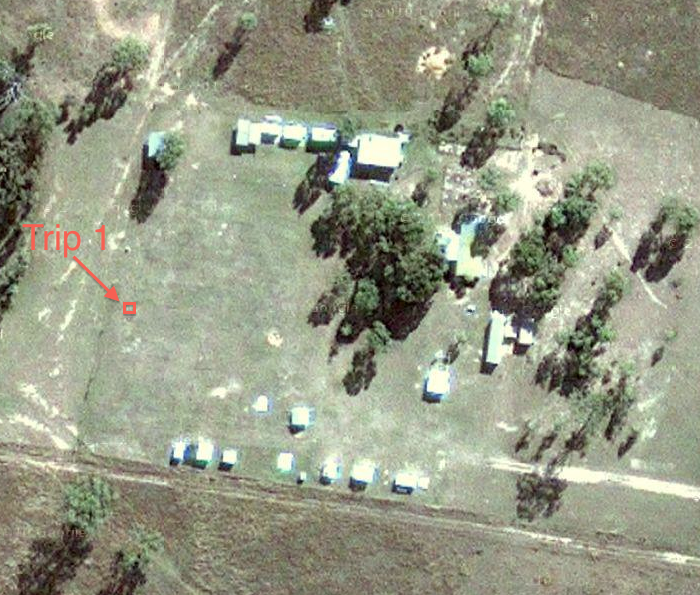
Trip 1
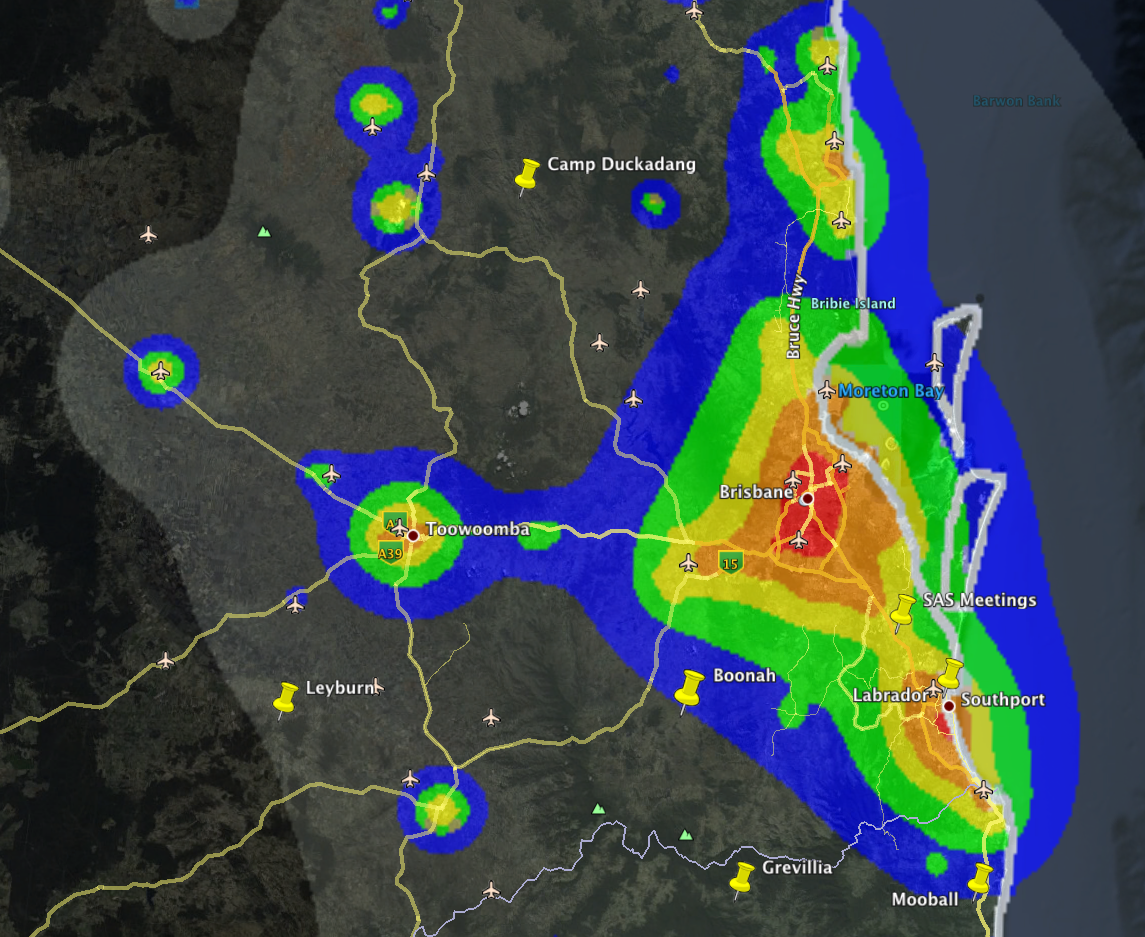
My options were the Astrofest at Camp Duckadang http://www.qldastrofest.org.au/ from August 10 – 18 or a weekend trip to the Leyburn astronomy site on August 18 – 19. Deciding that I was probably not yet equipped for a week long expedition to the Astrofest, I thought I should do a 2 day trip to Leyburn instead. This idea was strengthened by finding out that Noeleen Lowndes, the club President whose talk a year ago at O’Reilly’s Guesthouse inspired my joining the SAS, was going out to Leyburn on Saturday 18th. I arranged to go out at the same time as Noeleen so she could show me the ropes.
In preparation, I increased my 12v / 18 amp hour battery supply from 1 to 3 and my camera battery supply from 1 to 5. I acquired a set of 3 dew heaters, a stretcher and a new sleeping bag.
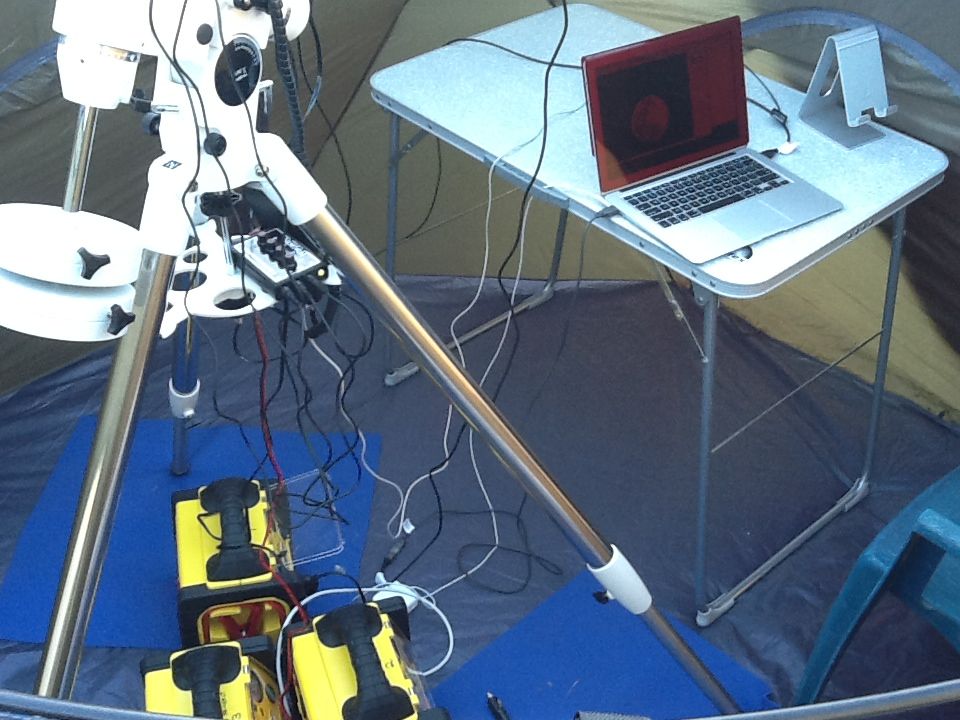 My plan was to pack slowly and carefully on Friday afternoon for a Saturday morning drive out to Leyburn. When I rang Noeleen at 10:30 am Friday 17th to finalize the Saturday departure time, she said “Change of plan; we leave in 1 hour!” .. so I packed and hit the road by noon. Arriving at 3:30 pm, I was set up by 5 pm.
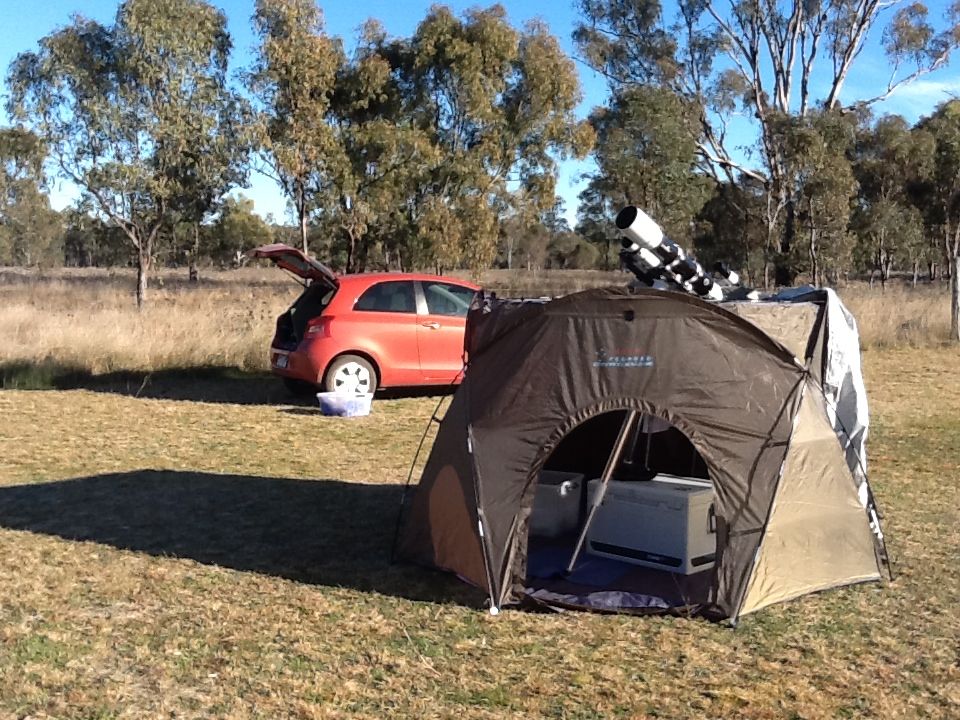
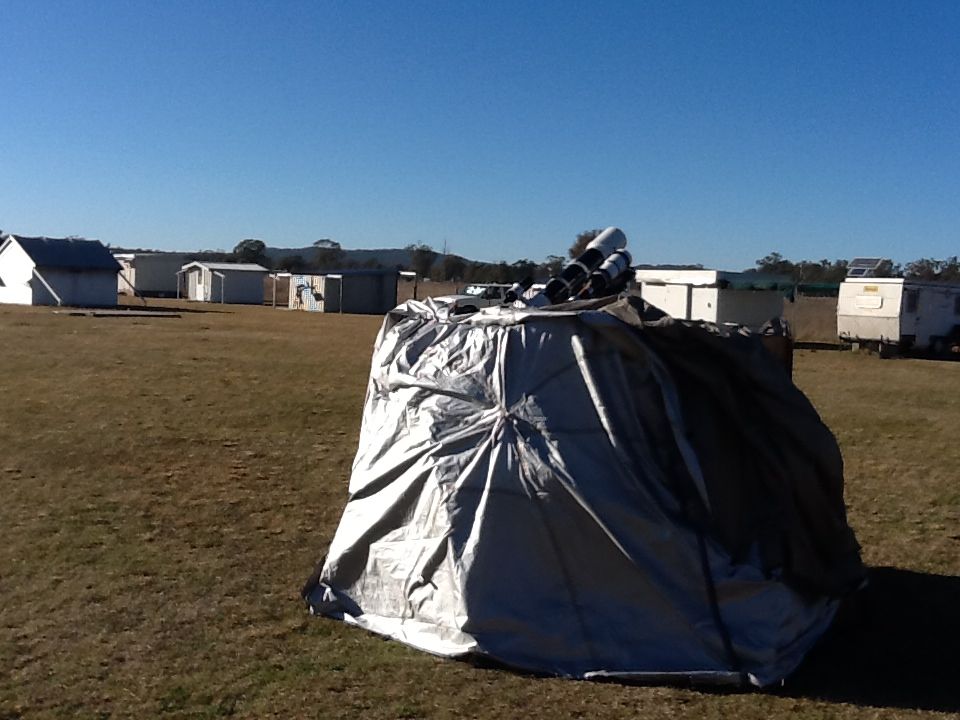
At dusk, the temperature was 6°C, falling to -6°C by 3 am. Drift alignment took from 7:40 pm to 9:30 pm as the initial position of my tripod was incorrect. Although the sky was clear, the wind was intermittently sufficient to cause the guide star to be lost. Under these conditions, I found that either wind gusts or dying camera batteries interrupted most of my camera series. The cold affected more than just my batteries as I belatedly realized that my portable computer was set to sleep after 15 minutes, immediately terminating both guiding and camera shots every time it happened. Despite all this, I managed a shot of the Lagoon Nebula.
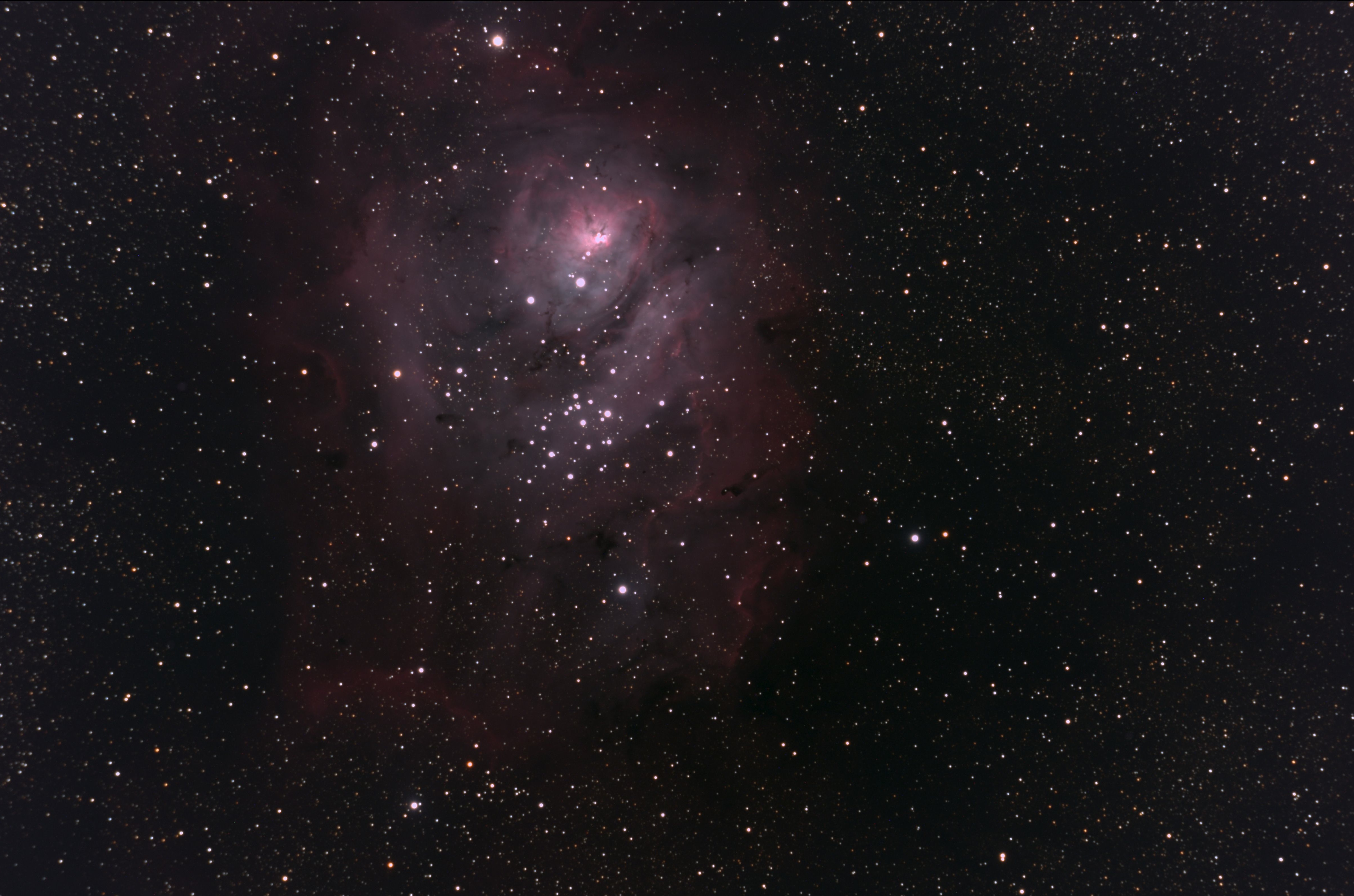
Lagoon Nebula M8 in Sagittarius.
August 17, 2012
ED 120 mm auto-guided.
Canon 550D ISO 800.
12 min x 6 lights, 6 x Flats
The next day, I partially recharged my batteries using Noeleen’s generator and had another attempt that night.
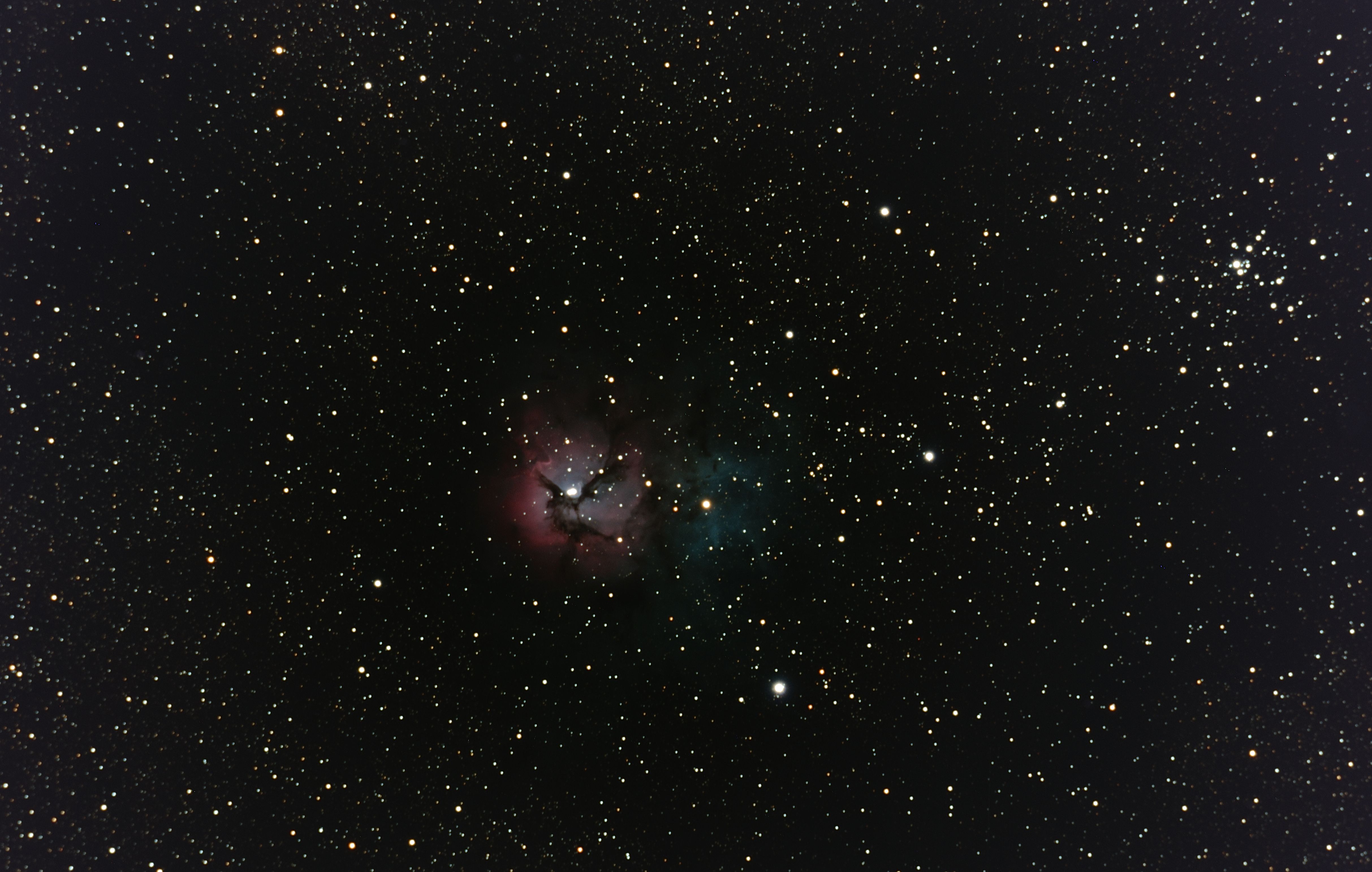
Trifid Nebula M20 in Sagittarius.
August 18, 2012
ED 120 mm auto-guided.
Canon 550D ISO 800.
6 min x 7 lights, 6 x Flats
These were better quality images than possible in the city but I had a long list things to do before my next attempt at Leyburn. However, I had learned a lot and I had the luxury of sharing meals with Noeleen and Graham in their camper van, sharing their generator and sleeping in the annex of their camper van, for all of which I am very grateful.
Dark Site Adaptations for the next trip
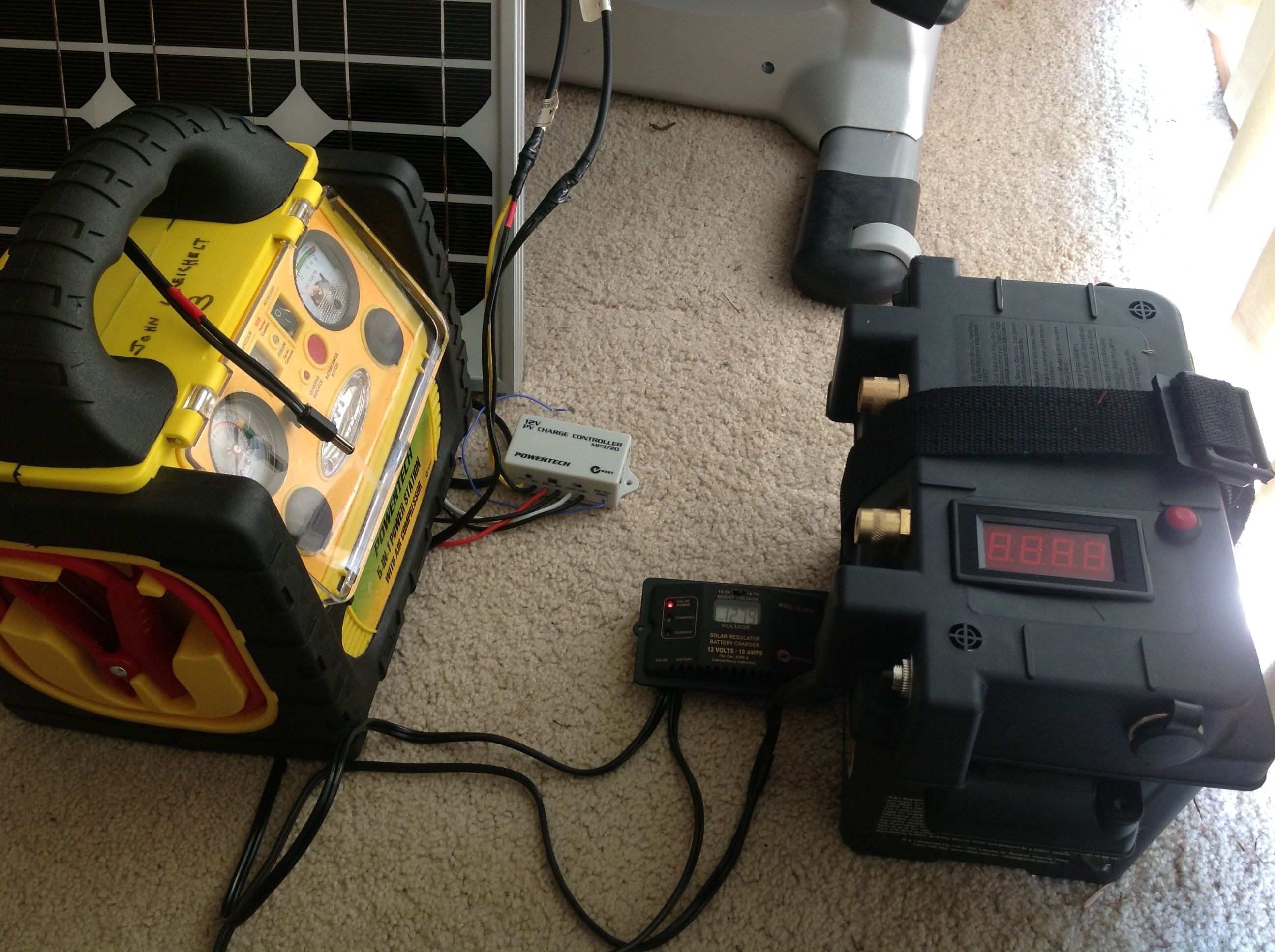
1. Batteries: To my collection of 3 x 18 amp hour batteries, I added a 35 amp hour deep cycle battery and a 10W solar panel charger system. The solar charging system was designed for the deep cycle battery. With the assistance of Ray Suckling, a second power regulator was added to allow the solar panel to charge the 18 amp hour batteries as well.
The deep cycle battery’s job will be to power the HEQ5 mount. One of the yellow 18 amp hour batteries will be for the dew heater system, one for the portable computer and one for the Canon camera, for which plan I needed more electronic bits.
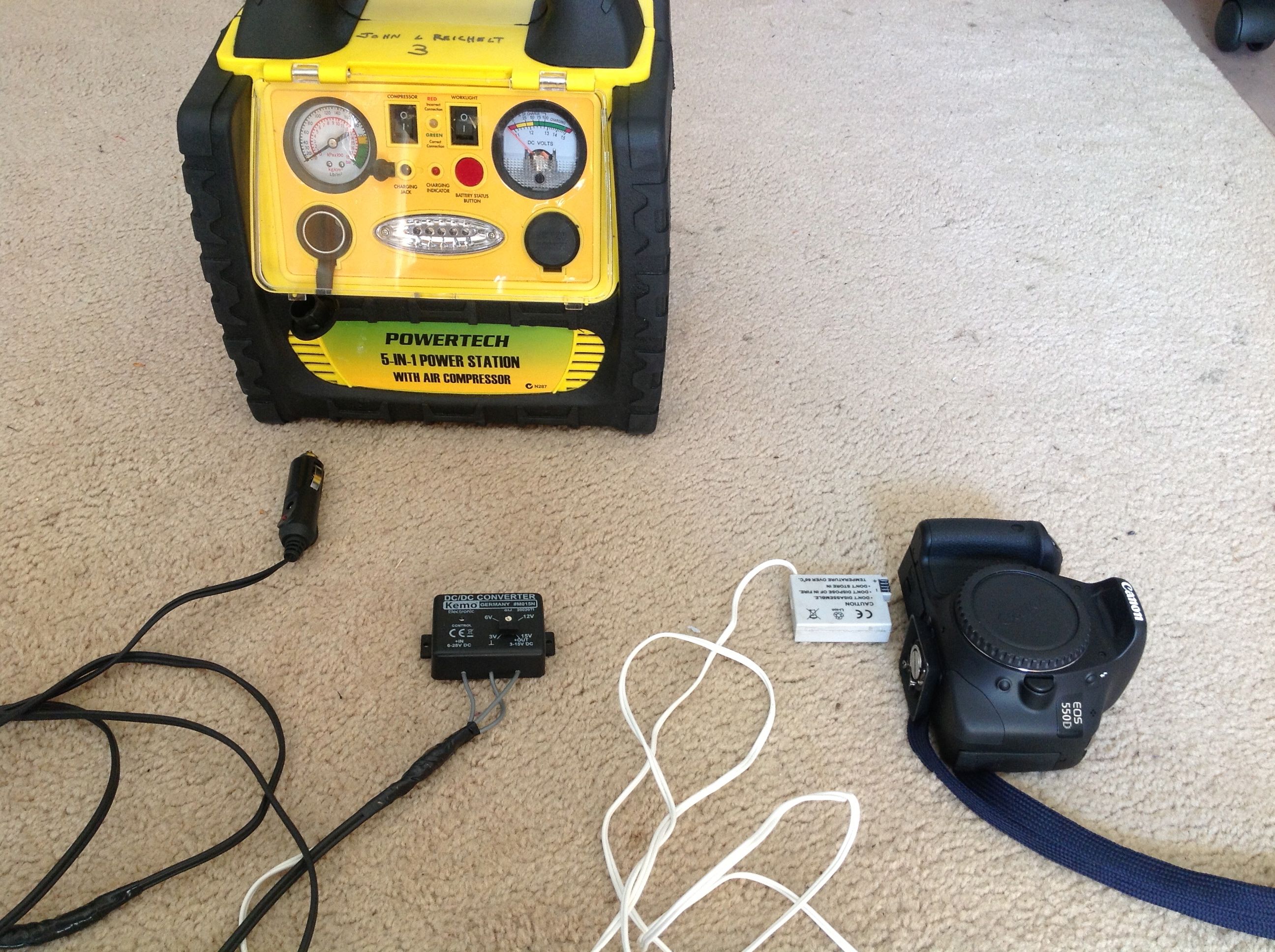
2. Camera battery: A Canon camera battery was sacrificed to build a system to allow the Canon camera to run off an 18 amp hour 12 V battery, again the work of Ray Suckling. No more camera batteries running out in the middle of a series of shots.
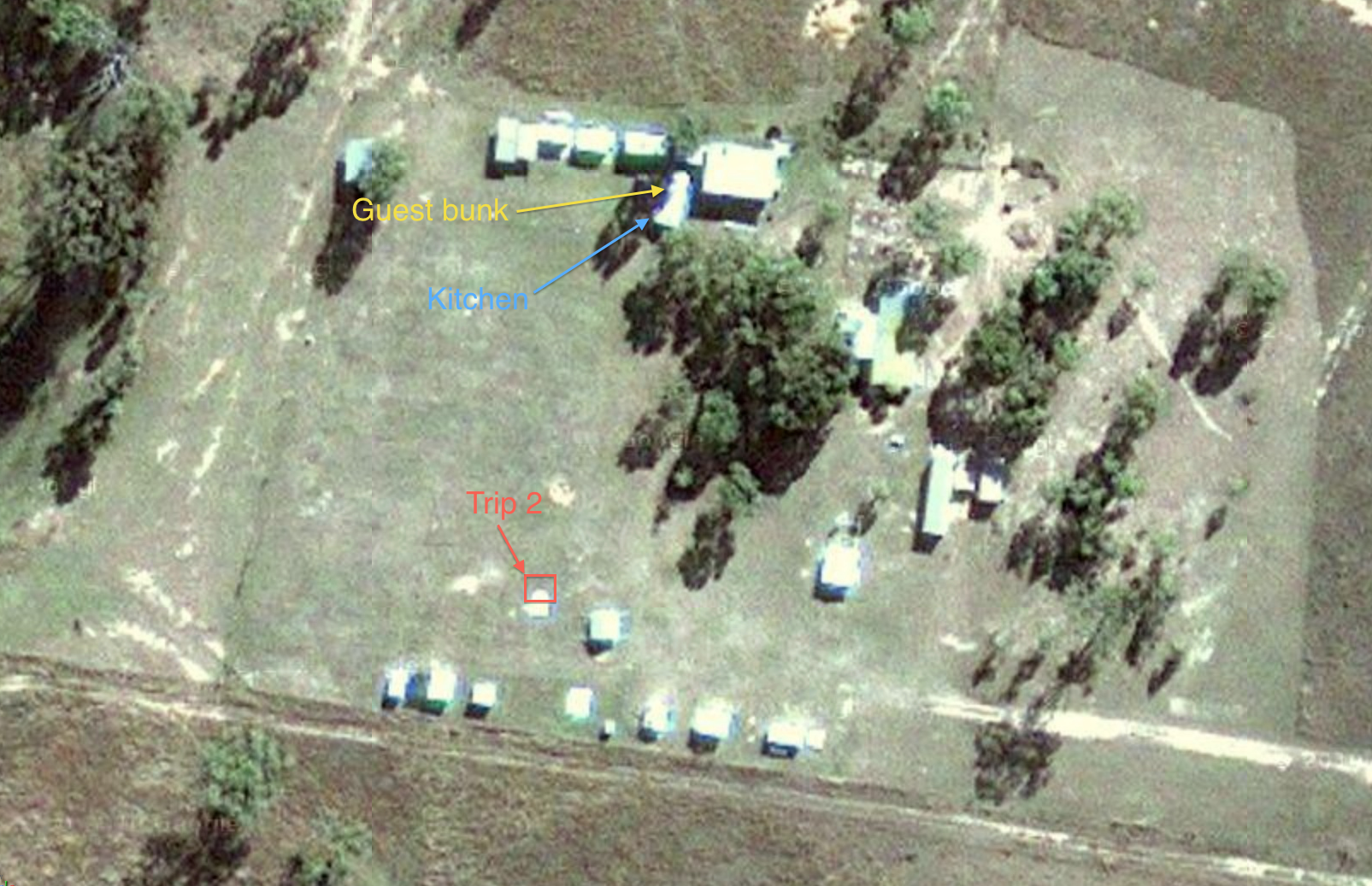
3. New tent arrangement: Since I found that having the telescope inside the Astro tent did not protect it from wind gusts or the dew, I decided to have the scope outside the tent. With the tent roof on, there was dew protection so I set the computer table up half inside the tent. I also planned to use the site’s Guest bunk and kitchen facilities.
Trip 2
My second Leyburn trip was on September 7th – 9th, which was the week before the official weekend with the moon being in the last quarter and projected to rise just after midnight. I packed on Thursday, had an interesting hour of dentistry in the morning, jumped in the car and convoyed out to Leyburn with Ray Suckling.
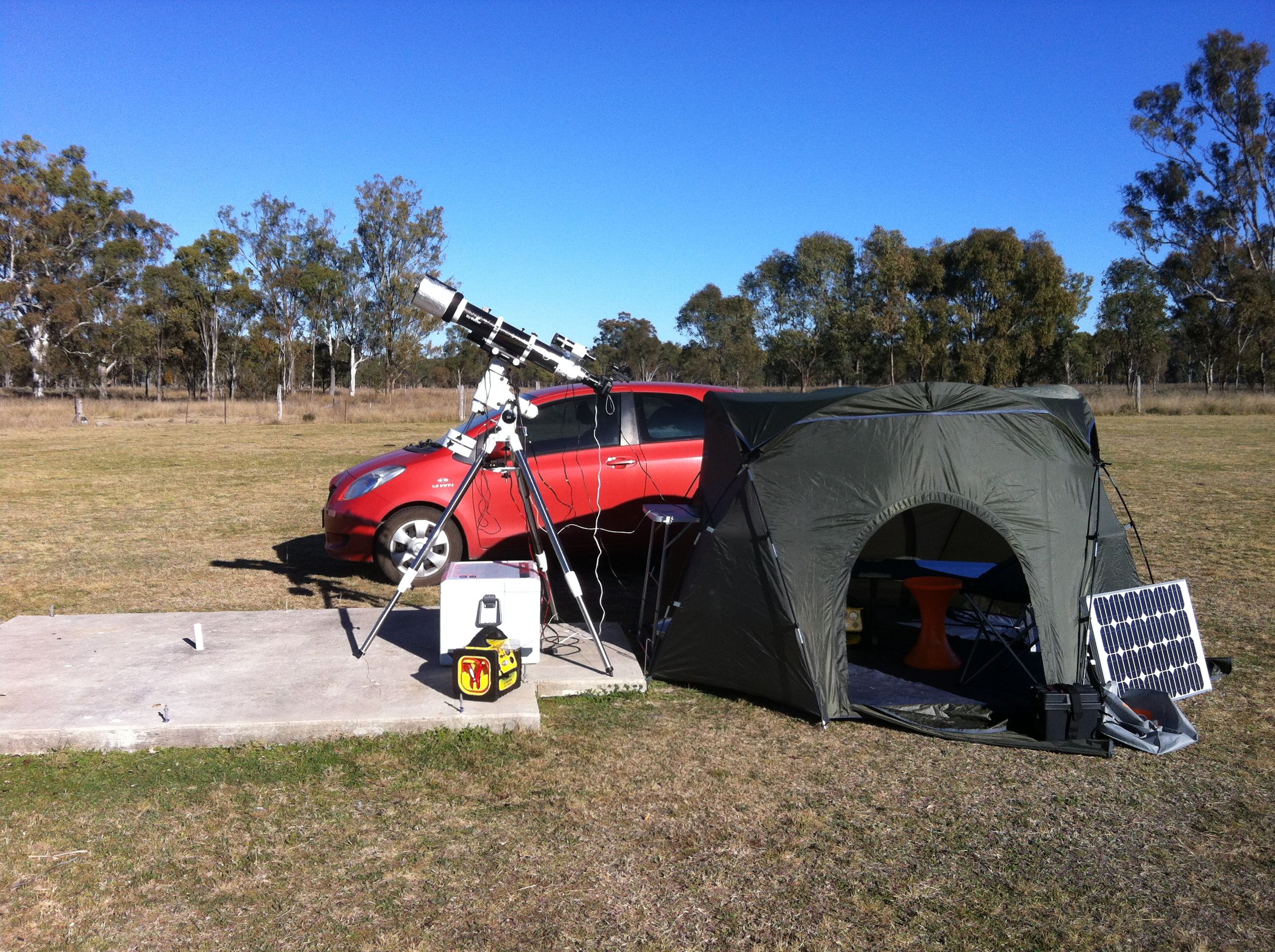
After sunset, Ray, 2 other SAS members (Steve and Brian) and I all set up quickly and got our targets and, just as I was nudging my first target to the centre, Ray came out and said, “It’s all over … look up”. Looking up, a great band of cloud was sweeping across, along with a lot of wind. After the cloud, the wind was still prohibitive for me (Steve got good panorama shots) and it lasted all day on Saturday (Sept 8th). I had decided that, if the wind continued, I would dismantle and re-assemble hard up against one of the buildings because the wind was SW and my target in Sagittarius would be visible all the way down to the horizon. At 4.30 pm, the wind was still strong so I shifted … immediately, the wind disappeared entirely  Steve then helped me align using the polar scope. Once he was done, I still could see nothing through it …. but it was spot on because the drift alignment needed hardly any adjustment. Target acquisition was fast and I started my experiment …
My experiment was to do a series of shots of the Lagoon Nebula M8 in Sagittarius using ISO 6400 down to ISO 800 using my modified Canon 550D which is reported on the internet to sustain higher iso settings. Due to running out of time and computer battery, I only managed ISO 6400 and ISO 3200. Steve and Ray and I were all targeting objects in Sagittarius and all about the same time (just before midnight) noticed the stars being affected by the atmospheric conditions. After midnight, the moon rose. On Sunday morning, there was frost all over the top of my observing tent. We packed and left by 9 am.
I analysed all the shots and determined that there was very little or no penalty that I could detect using ISO 6400 compared to ISO 3200 and the main variable was, in fact the atmospheric conditions. All the ISO 6400 shots were processed with flats (10) but only the 8 minute ISO 6400 shots had darks (5).
1 minute set (stacked 7 … one had a plane) ;
2 minute set (stacked ;
4 minute set (stacked 7 .. one blurred) ;
8 minute set (stacked 6, which is all I took).
The data for the 4 exposure times were stretched in Nebulosity then processed in Photomatix Pro to do the High Dynamic Range fusion process to give the final image. On advice from my friends at Bintel, I re-processed the data, this time avoiding clipping the red which I had been systematically doing without realising it.
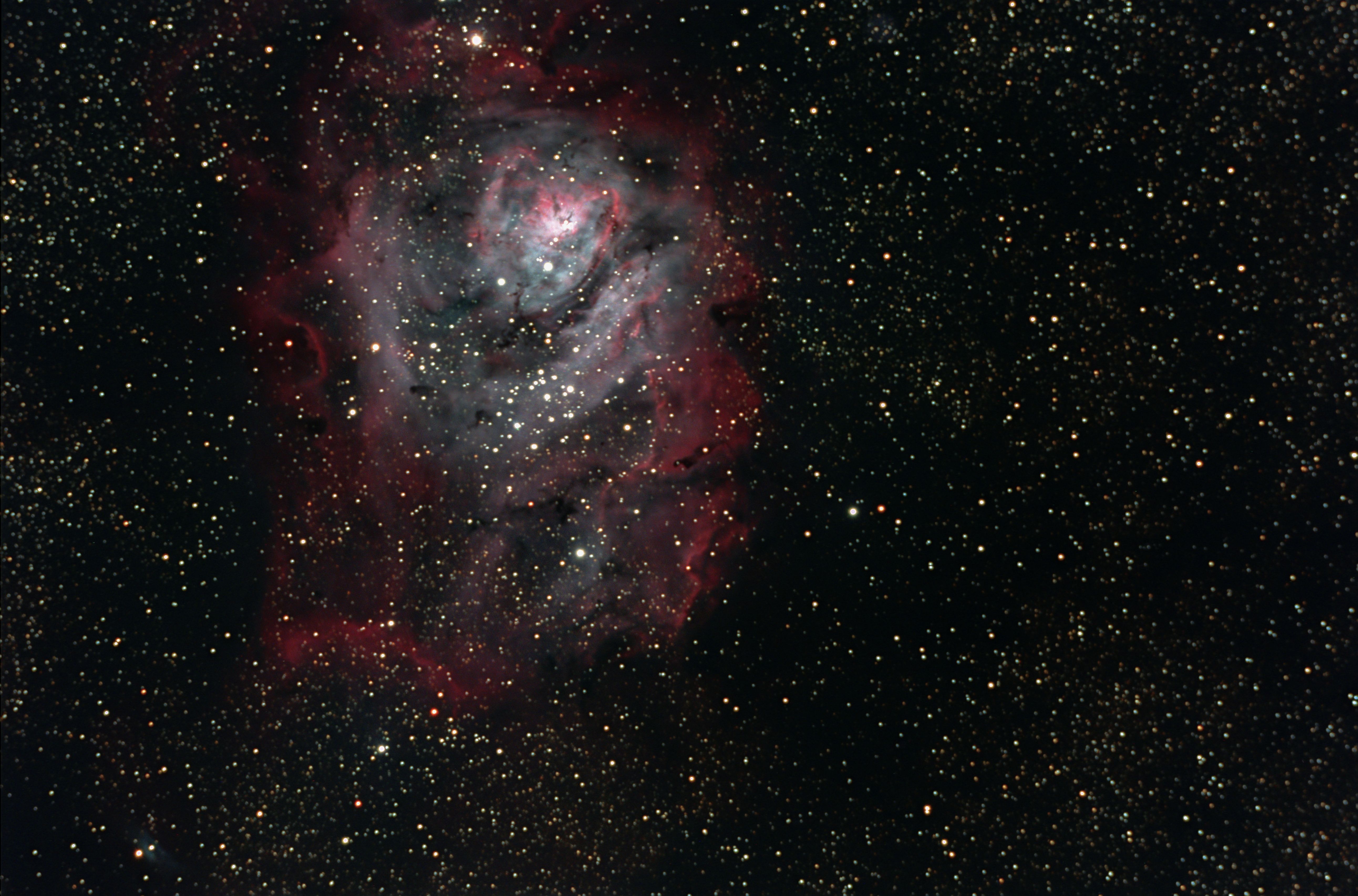
Lagoon Nebula M8 in Sagittarius.
September 8, 2012
ED 120 mm auto-guided.
Canon 550D ISO 800.
1 min x 7, 2 min x 8, 4 min x 7, 8 min x 6, 6 x Flats, Darks 8 min x 6.
This image shows more faint nebulosity and more dark lanes than I could produce at my home site so this dark site stuff looked like shaping up … but I was still not properly prepared and there was another trip planned in a week’s time.
Dark Site Adaptations for the next trip
1. Check the focus during the evening rather than just once at the start.
2. Assemble the camera on the scope with the scope positioned vertically as there was some indication in my shots that the camera was not square on.
3. Test out exposures up to 8 minutes at ISO 6400 on some more objects.
Trip 3
On September 14th, trip 3 to Leyburn started the same way as trip 2, but without the dentistry. At dusk, setup was fast and target acquisition achieved by 6:58 pm.
I shot the Trifid Nebula M20 from 6:58 pm until 10:30 pm and then the Helix nebula NGC 7293 from 11:14 pm until 1am. With ISO 6400, I took 8 each of 1, 2, 4, 8 and 16 minute exposures for M20 and 2 minutes x 8, 4 minutes x 8 and 8 minutes x 6 for NGC 7293. Conditions seemed fairly good. The temperature dropped to 3°C. The equipment was all good except for the MacBook Air which declined to accept charge below about 6°C. Fortunately, there was still 22% charge in its battery after 6 hours use but I was going to have to improvise something to overcome this.
The solar panel recharged all my batteries in plenty of time for Saturday night. Again I had a fast start, commencing image acquisition of the Eagle Nebula M16 by 6:55 pm. However, a weather change was brewing and these images had the most noise of the four images for the weekend. I finished 8 each of 1 minute, 2 minutes and 4 minutes and 6 of 8 minutes at 8:50 pm. Then an easterly wind change hit, blowing smoke from bush-fires to the east and breaking up auto-guiding. By 9:30 pm, the smoke cleared and the wind decreased a bit. I managed to shoot the Dumbbell Nebula M27 using 8 each of 1, 2 and 4 minute exposures and 6 of 8 minute exposures by 11:30 pm after which I collected darks. The temperature only got down to 9°C at which temperature the MacBook Air was happy to accept charging from the inverter of my 18 amp hour battery. Next morning, we packed and left by 9 am. It had been a relatively smooth weekend. Time to analyse the results.
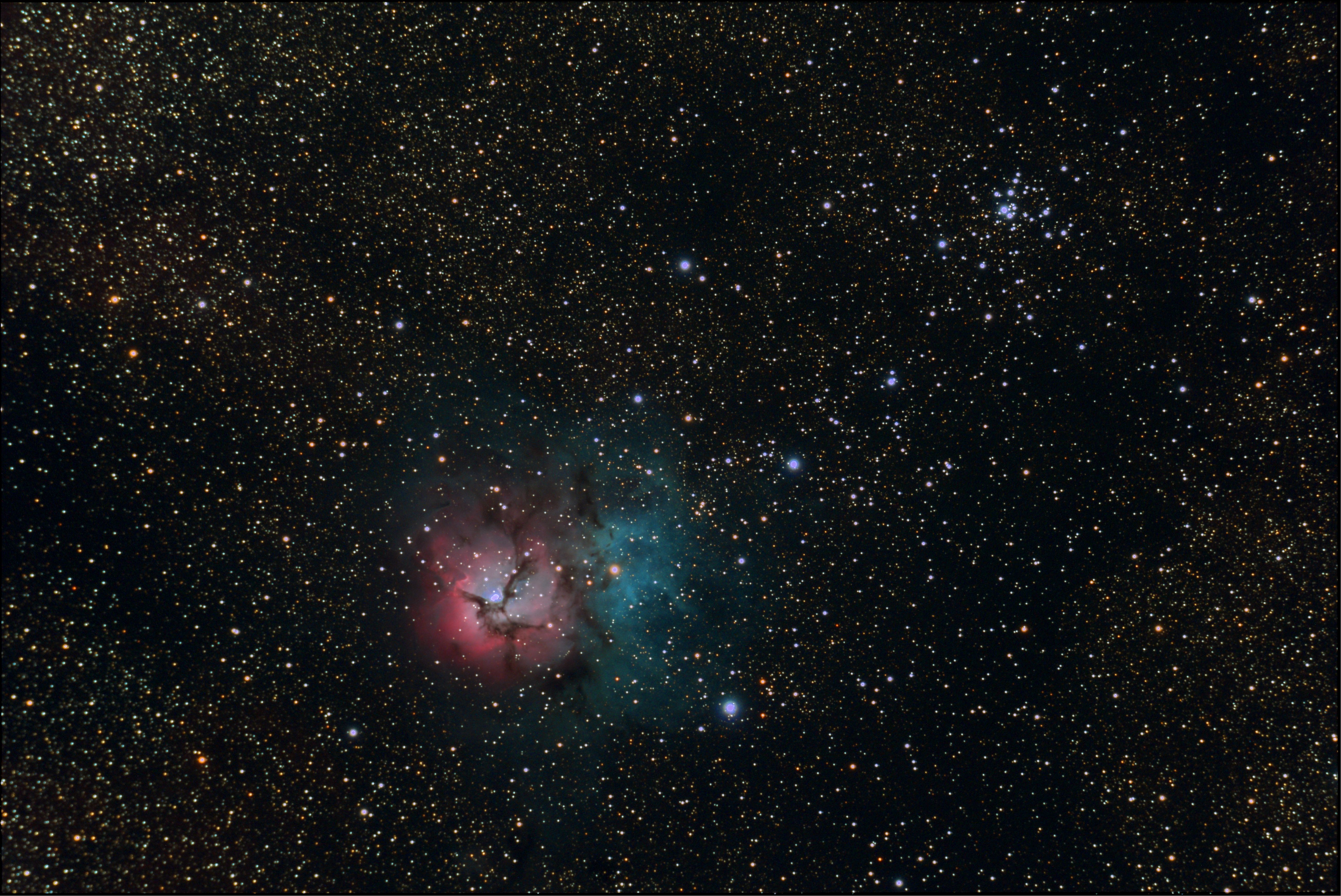
Trifid Nebula M20 in Sagittarius.
Leyburn. 7 pm. September 14, 2012
ED 120 mm auto-guided.
Canon 550D ISO 6400.
1 min x 8, 2 min x 8, 4 min x 8, 8 min x 6, 6 x Flats, Darks 8 min x 6.
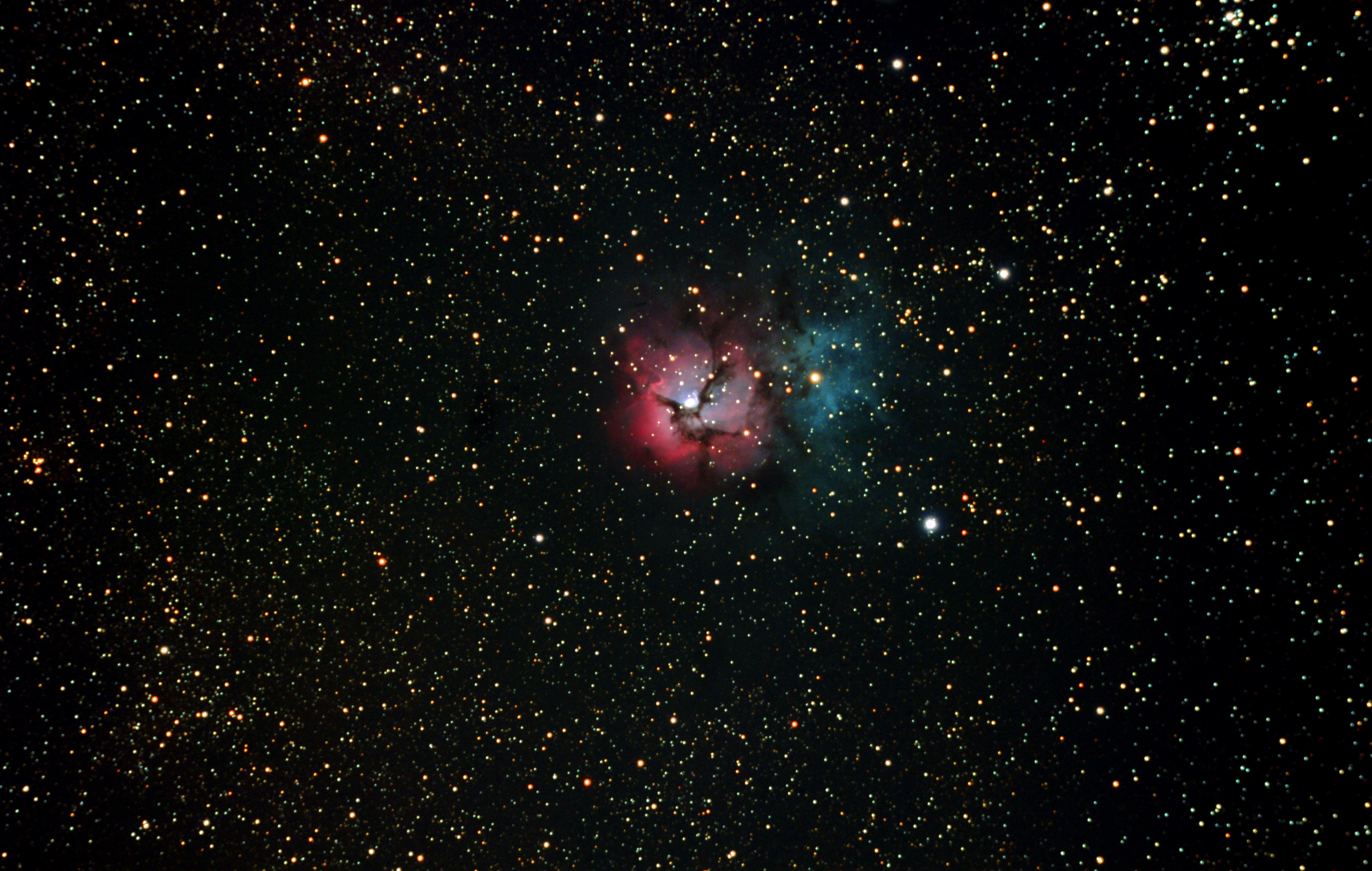
Previous best image of M20
Labrador. 7:22 pm. August 14, 2012.
Canon 550D ISO 1600.
3 min x 8, 6 min x 6, 12 min x 5, 10 x Flats, 5 x 12min Darks.
The new image shows more of the fainter green nebulosity.
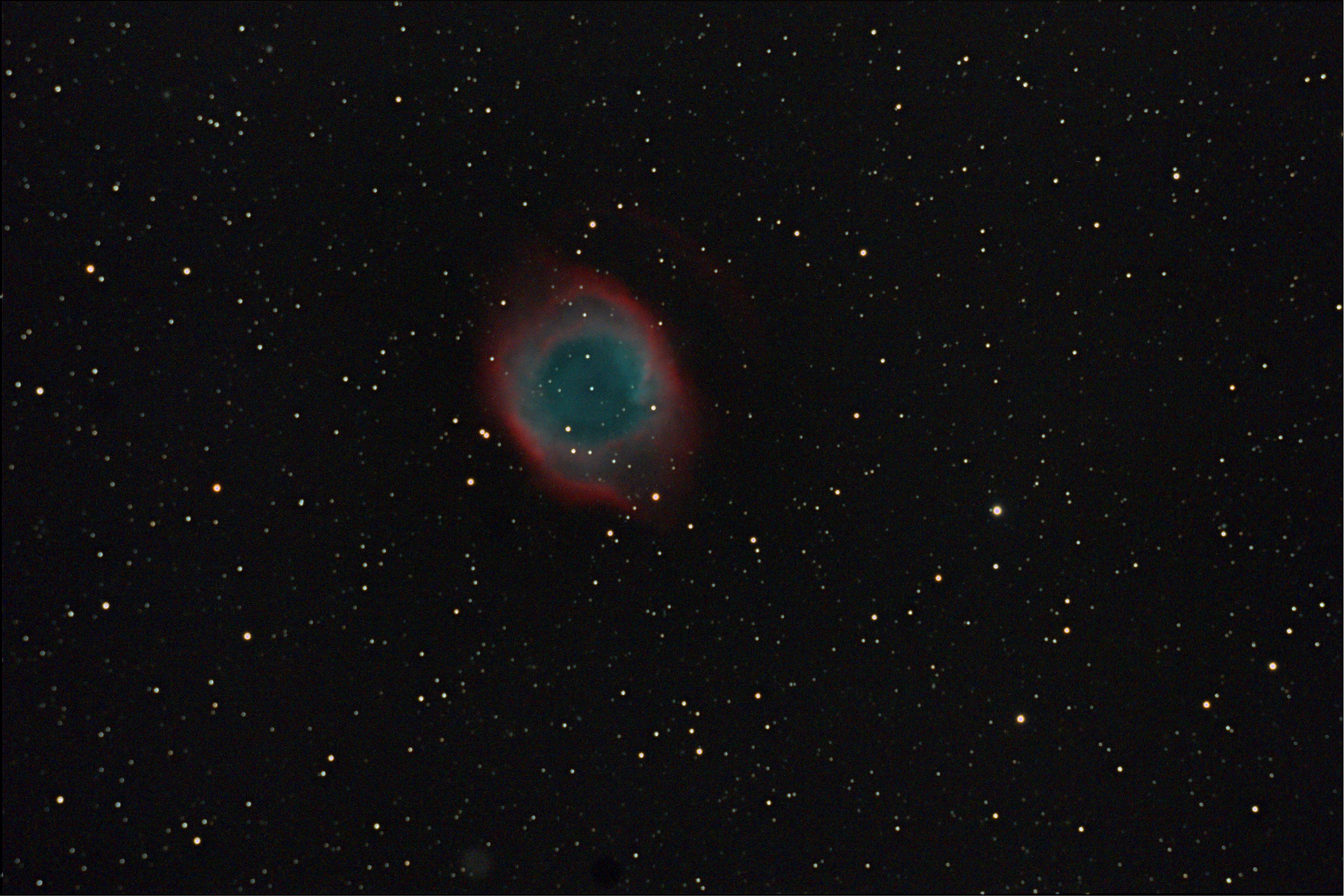 Helix Nebula NGC 7293 in Aquarius.
Leyburn. 11:14 pm. September 14, 2012
ED 120 mm auto-guided.
Canon 550D ISO 6400.
2 min x 8, 4 min x 8, 8 min x 6, 6 x Flats, Darks 8 min x 6.
Since I have never seen or photographed a planetary nebula before, it is difficult for me to evaluate but there did not seem to be much problem with having used ISO6400 for this image.
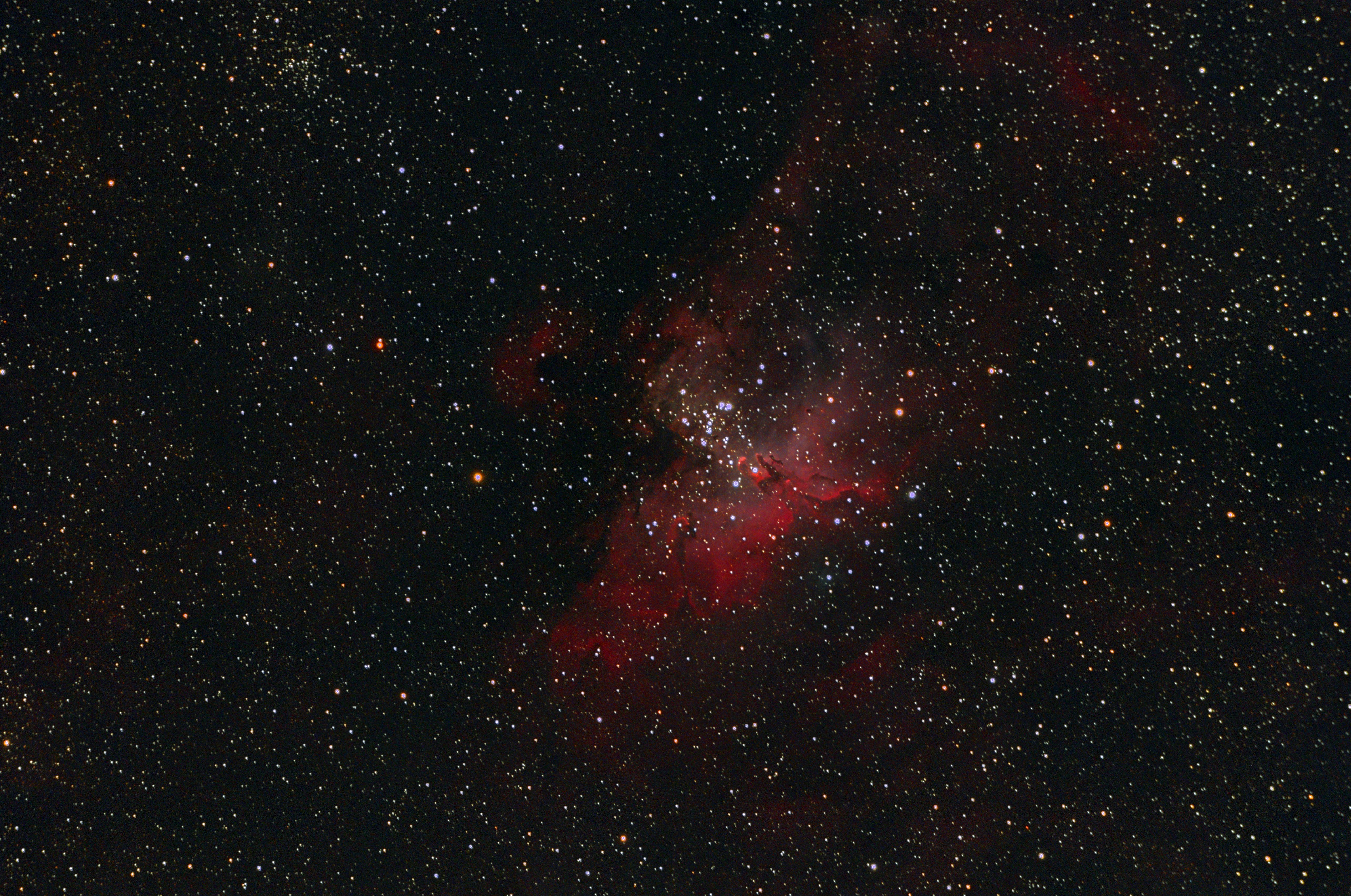
Eagle Nebula M16 in Sagittarius.
Leyburn. 7 pm. September 15, 2012
ED 120 mm auto-guided.
Canon 550D ISO 6400.
1 min x 8, 2 min x 8, 4 min x 8, 8 min x 6, 6 x Flats, Darks 8 min x 6.
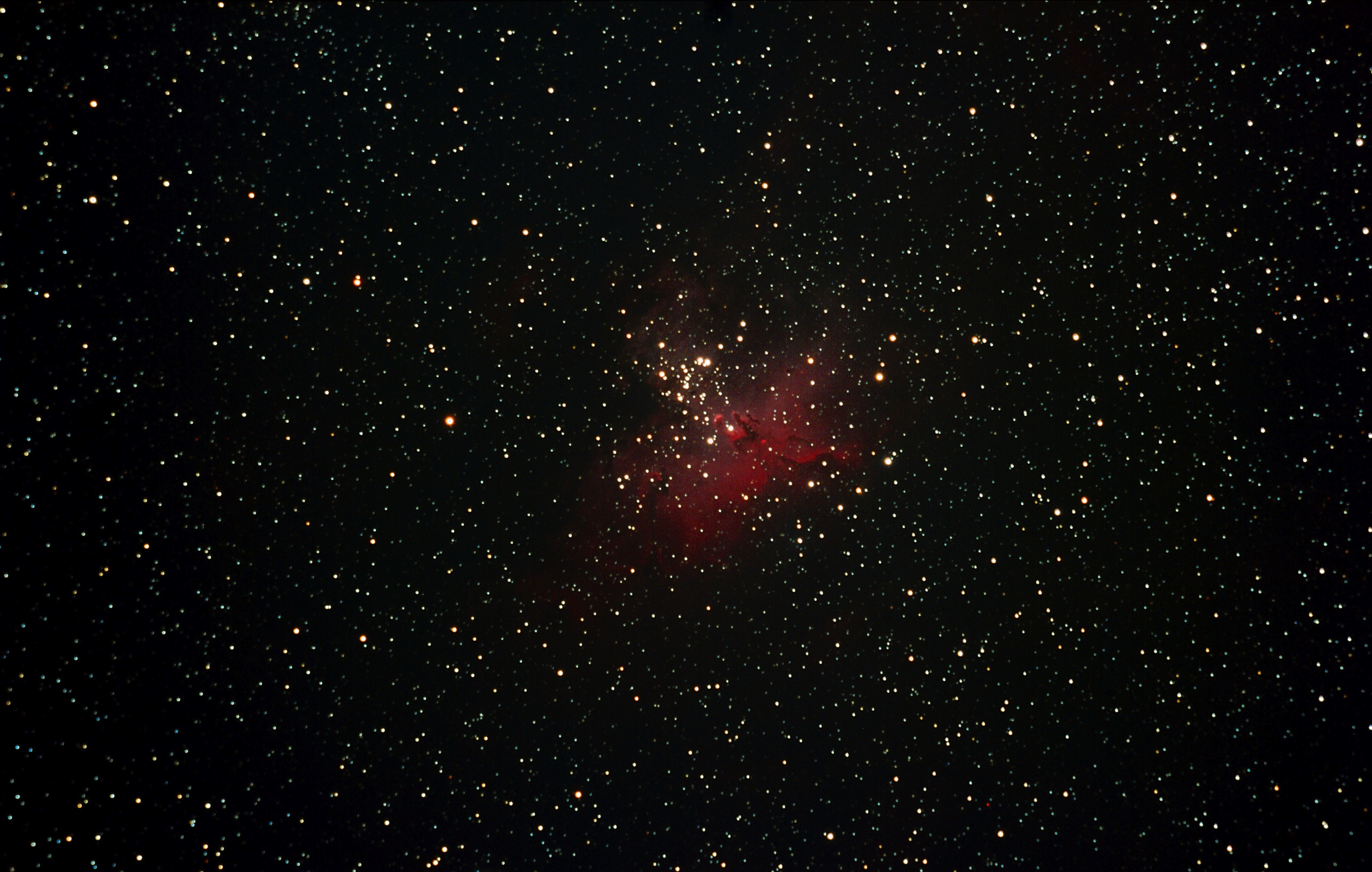
Previous best image of M16
Labrador. 7:24 pm. August 15, 2012.
Canon 550D ISO 1600.
3 min x 10, 6 min x 8, 12 min x 3, 10 x Flats, 5 x 12min Darks.
For the Eagle Nebula, the new image shows considerably more fainter red nebulosity than the previous image. The advantages of the dark site and the use of ISO 6400 are varying with the type of object being imaged.
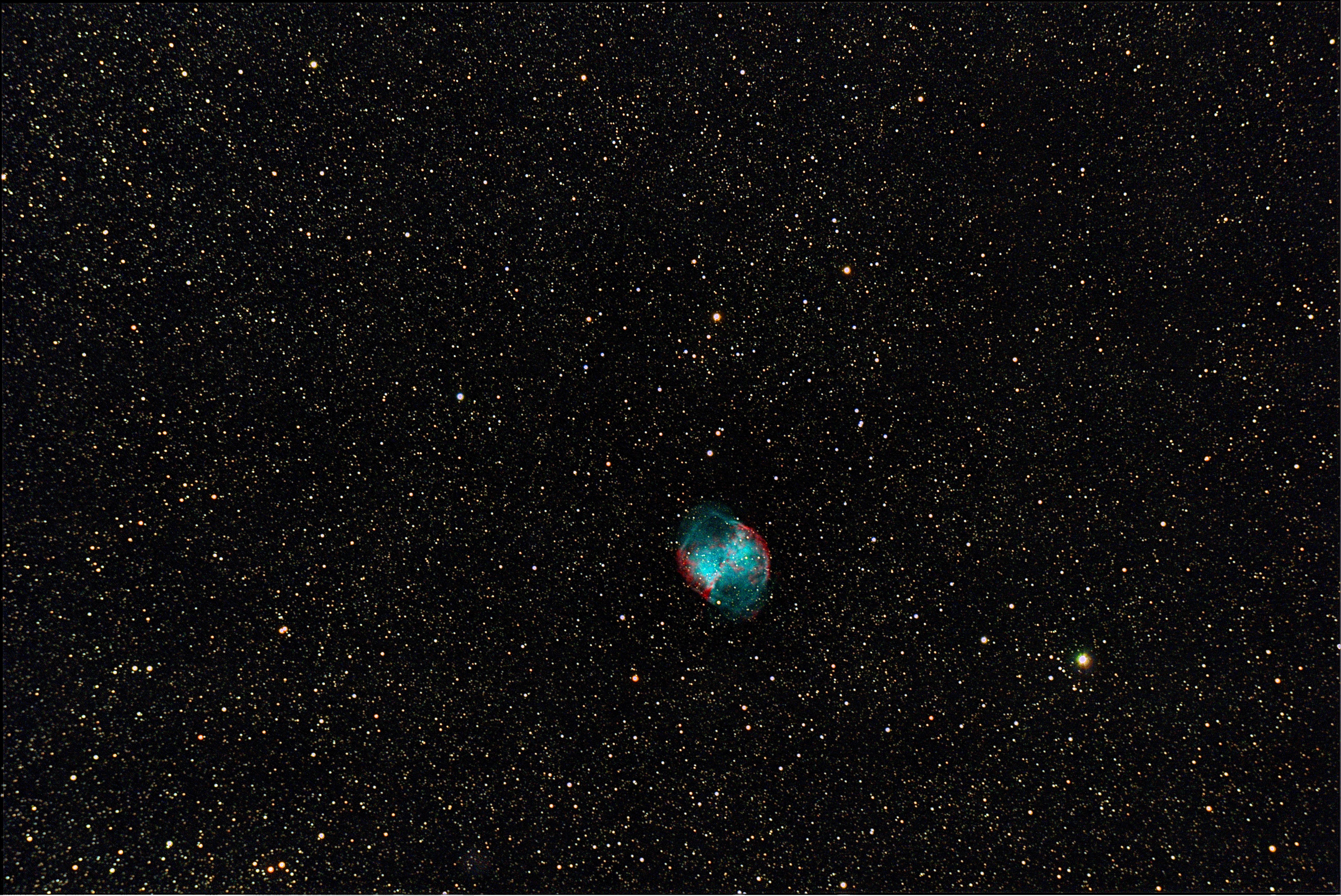
Dumbbell Nebula M27 in Vulpecula.
Leyburn. 9:30 pm. September 15, 2012
ED 120 mm auto-guided.
Canon 550D ISO 6400.
1 min x 8, 2 min x 8, 4 min x 8, 8 min x 6, 6 x Flats, Darks 8 min x 6.
The atmospheric conditions for this shot were suspect as bushfire smoke had just blown through but the ISO 6400 settings again appeared to give a good result.
Overall Result: This trip (trip 3) was the first one where my degree of preparation allowed me to collect all the images I had planned and the results were very rewarding. I still came back with a list, however !
Dark Site Adaptations still needed:
1. Electronic focuser.
More frequent checking of the focus is easier with an electronic focuser. Bintel supplied me with a Skywatcher electronic focuser. Since a Skywatcher focuser was going onto a Skywatcher refractor, installation should have been routine, but no. The included instructions were for reflectors only. The method needed is described in
http://www.youtube.com/watch?v=gpIteLt3xcw&feature=relmfu
Even then, there were a few issues to resolve.
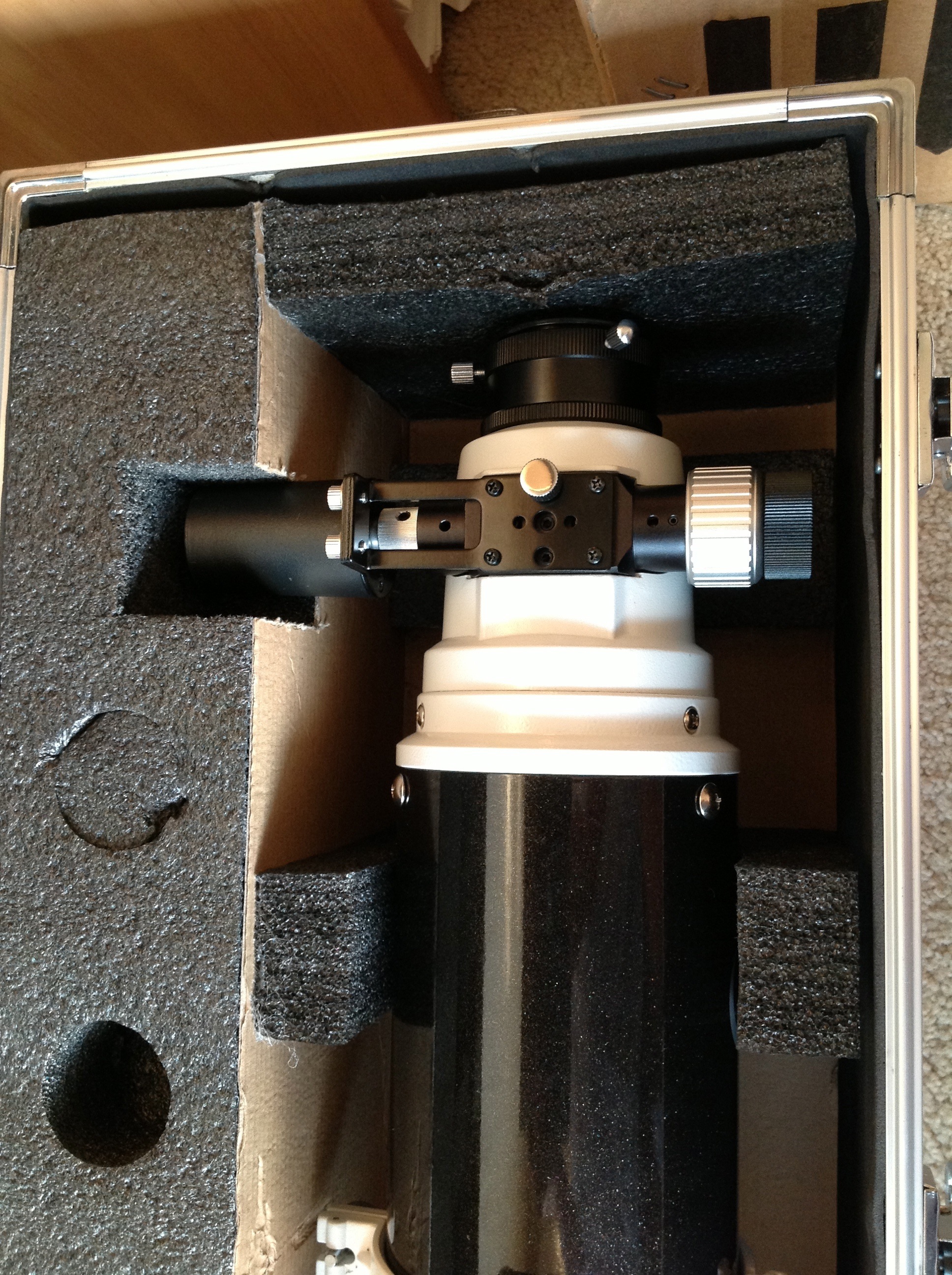
A. The 4 screws that had to be removed from the scope were too tight for the supplied allen key, which shredded. A better quality allen key removed the screws satisfactorily.
B. The bracket can only go one way around (the side without the 10x focuser) and one way up (the bracket is convex) and this way blocked the access for the locking screw. A new access hole was drilled.
C. The scope was made to fit back in the box by cutting a place for the focuser to fit into.
D. The short cable to the control box was replaced with an off-the-shelf 8m telephone cable, which functioned perfectly.
E. There was a second trivial mod to the scope box. The focuser forced the scope to go in up side down so it hit the foam cross bar, which needed to lose a bit.
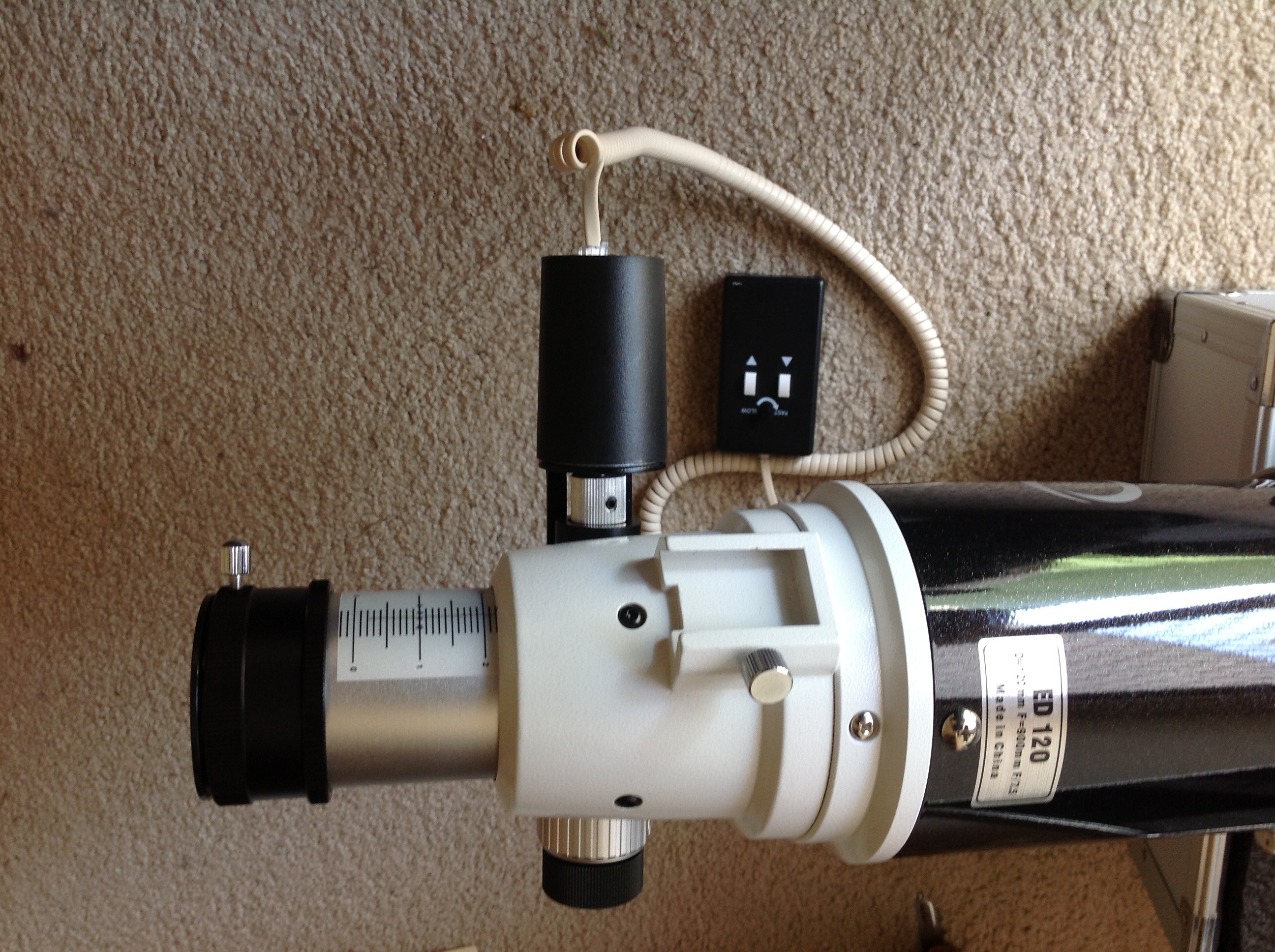
Finally, I applied a transparent adhesive label with artwork sent to me by Ray Suckling to allow recording of the focus point.
2. Collapsible black box.
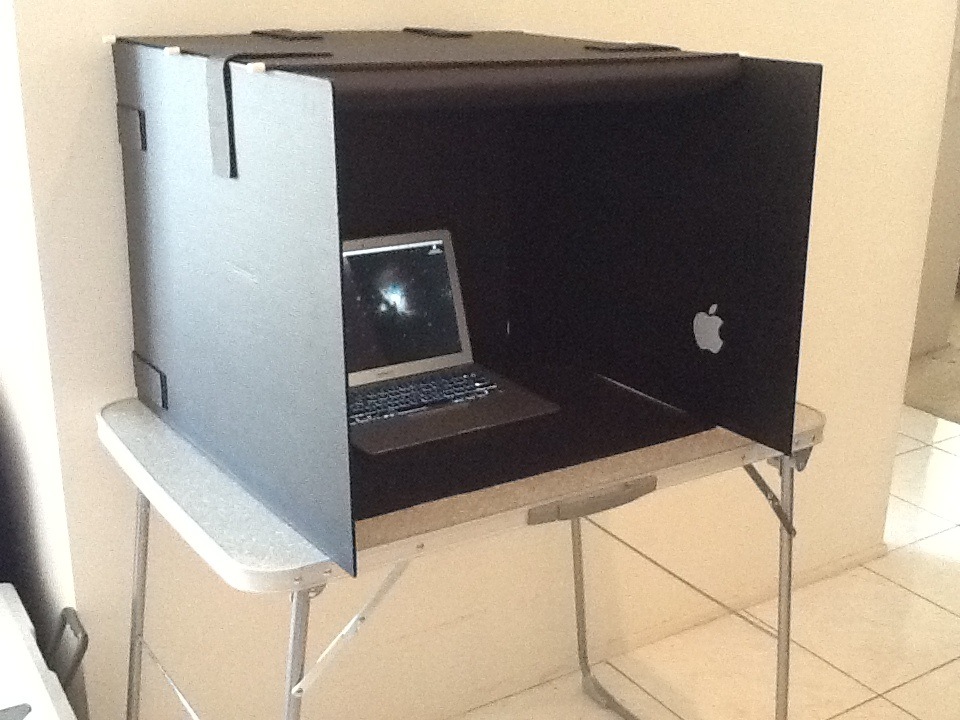
This is my new collapsible field box from pre-cut laminated cardboard bits from Spotlight and velcro straps. The roof is supported by plastic knitting needles and cables go through a hole at the back.
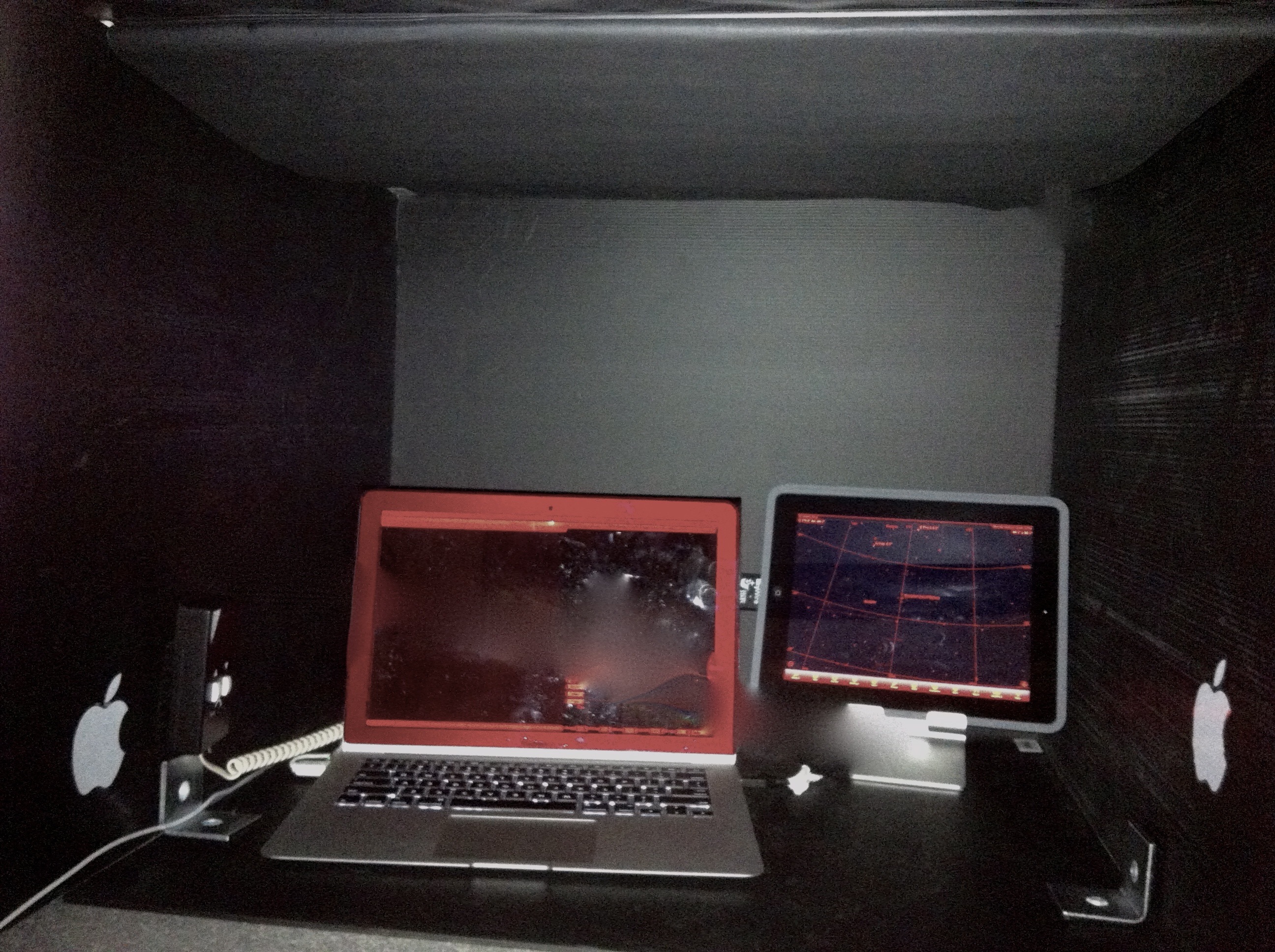
This system will protect the portable computer from dew and everyone else from the light of the portable computer. It will also allow me to sit at my portable computer and focus the scope using Nebulosity’s “Fine Focus” function. The ease of this method will, in turn, encourage more frequent checking of the focus during an evening.
The iPad is running SkySafari Pro and is attached to the hand controller with a SkyWire cable ( http://www.southernstars.com/products/skywire/index.html ), giving a visual interface to the goto function of the hand controller. The MacBook Air is being recharged from a 12V car battery using a Compact Mikegyver Power Travel Kit connector from http://mikegyver.com/Store/ which is more efficient than using the inverter on the battery … and if the MacBook Air gets too cold to accept charging, I now have a hot water bottle for it !
3. Improving image quality
Although the use of ISO 6400 and exposure times up to 8 minutes has appeared to be feasible so far, image quality could be improved by more thorough collection of darks for all exposure times and raising the number of lights back up to double digits (say 10 to 12). There is also the possibility that image noise will increase as night time temperatures climb ; I may have benefited from the winter cold in my initial experiments.
My dark site adaptation is far from complete but it has progressed enough so that I can collect images and I am looking forward to the next favourable moon/weather cycle for my next trip.
3 Responses to Dark Site Adaptation