After enjoying my “first light” shots and then remembering that they had all been shot as jpegs, it was almost a month before I could try out taking shots in RAW and applying “darks”. On 15th July 2012, I set up, did a successful drift alignment but then did an inadequate 2-star alignment on the hand controller. This meant that my attempt to target the Lagoon Nebula landed me in a random spot in Sagittarius. In addition, I had not recharged my camera battery so after 6 x 5 minute shots of this random spot in Sagittarius, I had only enough battery for 2 darks.
I processed the shots anyway and found them full of interesting, unknown objects. A quick upload to www.astrometry.net identified the objects for me.
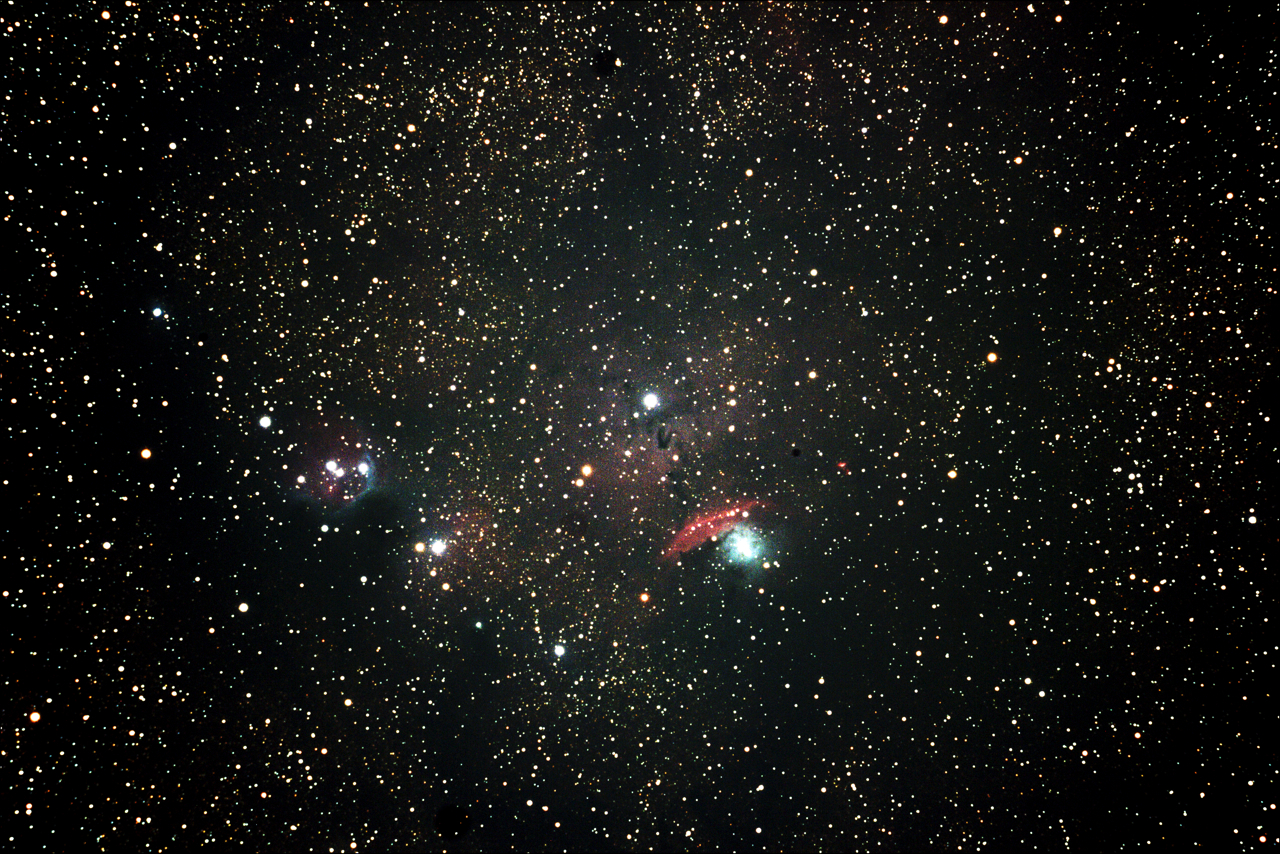
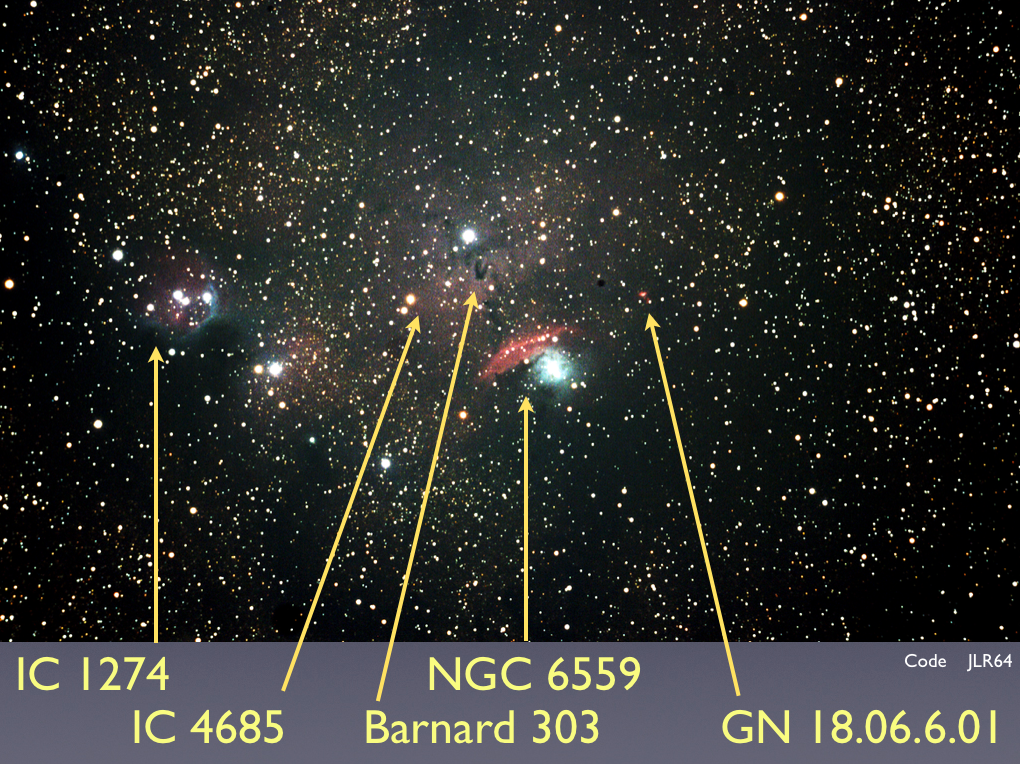
Somewhere in Sagittarius …
9:30 pm July 15, 2012
Labrador.
ED 120 mm autoguided.
Canon 550D ISO1600
5 min x 6 RAW with 2 darks.
After all these mistakes, it was actually a fun shot full of interesting stuff .. my first shots in RAW and “First Dark” 
The next day (July 16, 2012), after properly recharging my batteries, I took some flats at sunset, aligned earlier and well, properly aligned the hand controller and set about gathering images and darks by 7.30 pm.
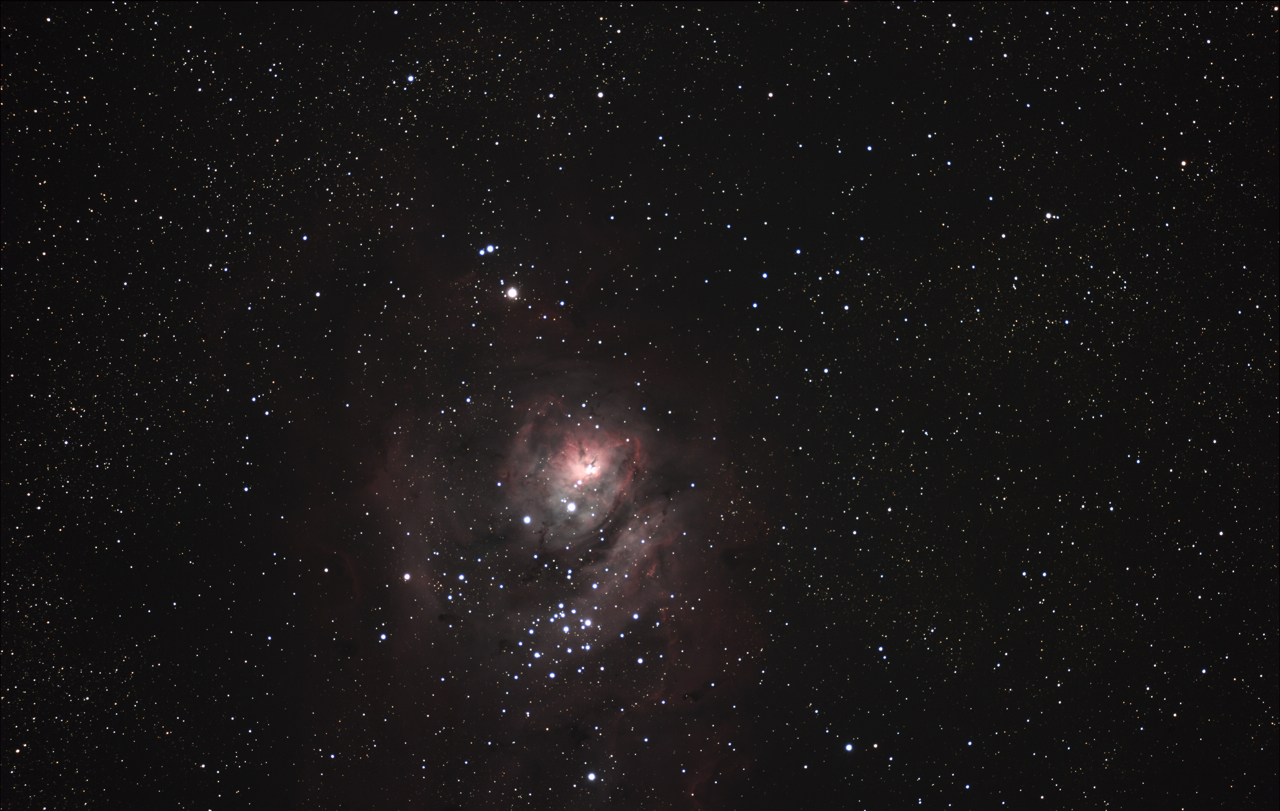
Lagoon Nebula M8 in Sagittarius.
7:45 pm 16th July, 2012.
Labrador.
ED 120 mm auto-guided.
Canon 550D ISO 1600.
6 min x 5 RAW, 6 darks, 6 flats.
First target was the the Lagoon Nebula which this time appeared as planned .. more or less .. actually framed a bit low .. but at least I had the system working. By 8:30 pm, I was framing the next target, the Trifid Nebula M20.
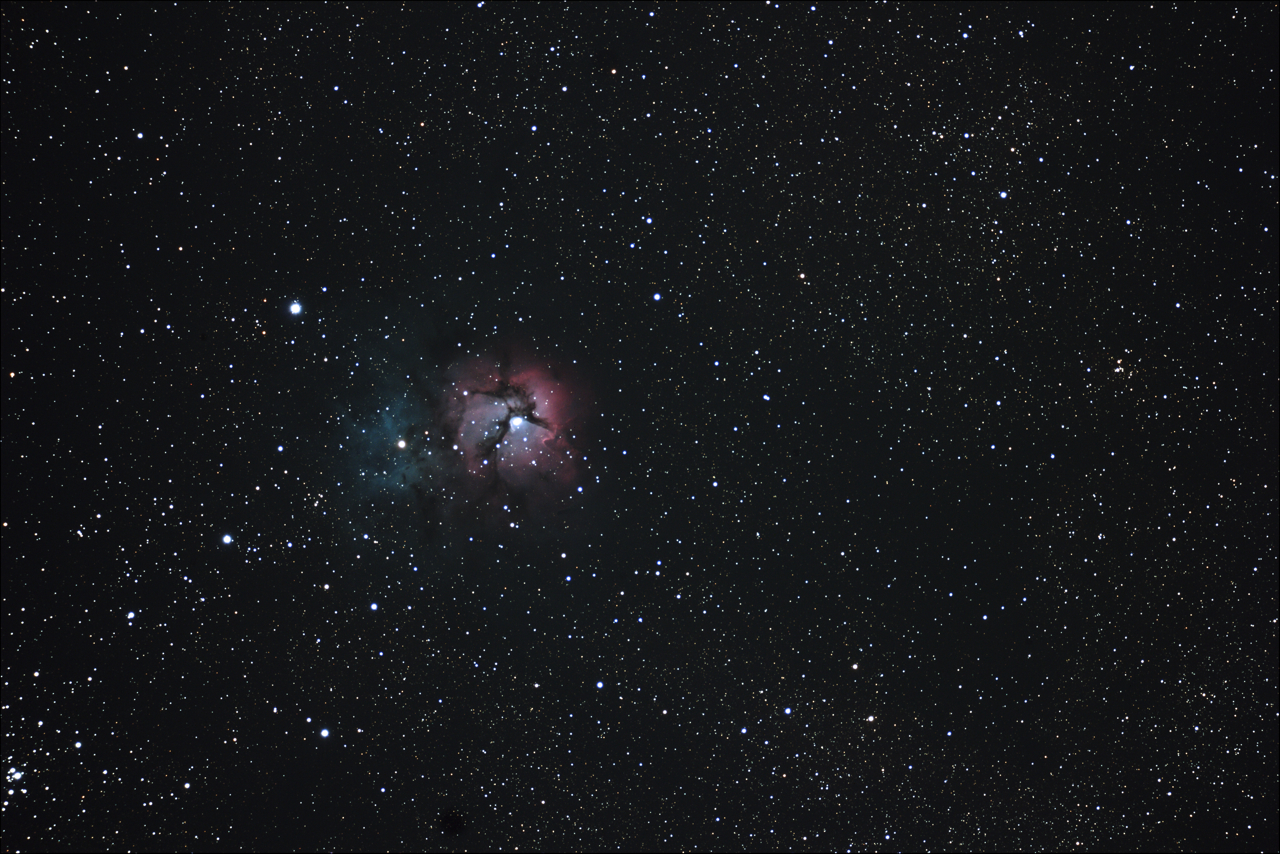
Trifid Nebula M20 in Sagittarius.
8:30 pm 16th July, 2012.
Labrador.
ED 120 mm auto-guided.
Canon 550D ISO 1600.
6 min x 5 RAW, 6 darks, 6 flats.
The Trifid Nebula has a special value for a beginner. After “modding” the camera, there is a concern that thereafter, everything will be red. The Trifid Nebula showed that a balance of colour still occurs. At 9 pm, with everything still apparently working, I moved to a third target, the Eagle Nebula M16.
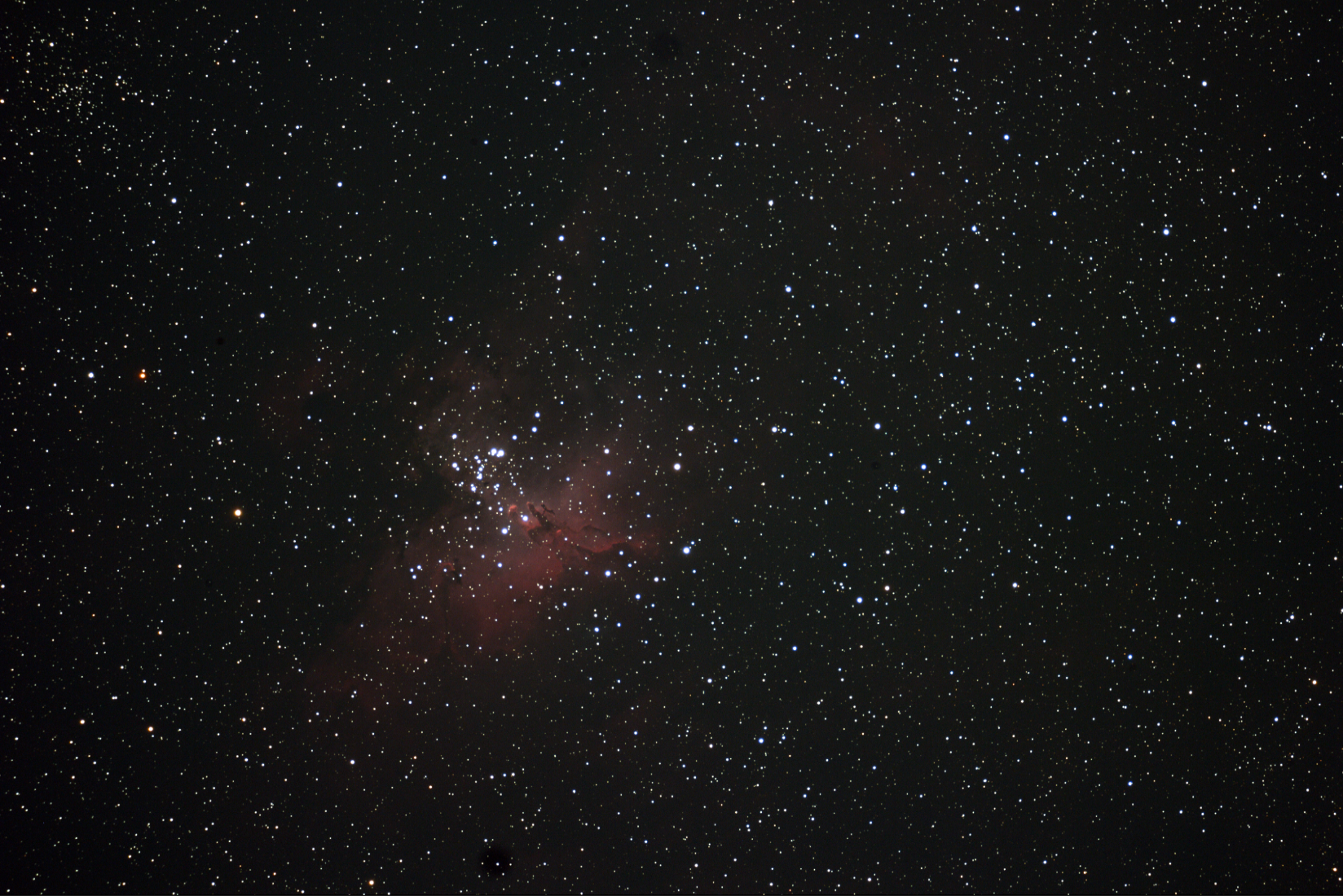
Eagle Nebula M16 in Sagittarius.
9:08 pm 16th July, 2012.
Labrador.
ED 120 mm auto-guided.
Canon 550D ISO 1600.
6 min x 5 RAW, 6 darks, 6 flats.
Now I had my very own version of the Pillars of Creation, just like the Hubble picture … more or less. After all that rewarding excitement of using RAWs instead of jpegs, the conditions were not suitable for some time. After a while, I got impatient and arose in the early hours to pick up the rise of Orion.
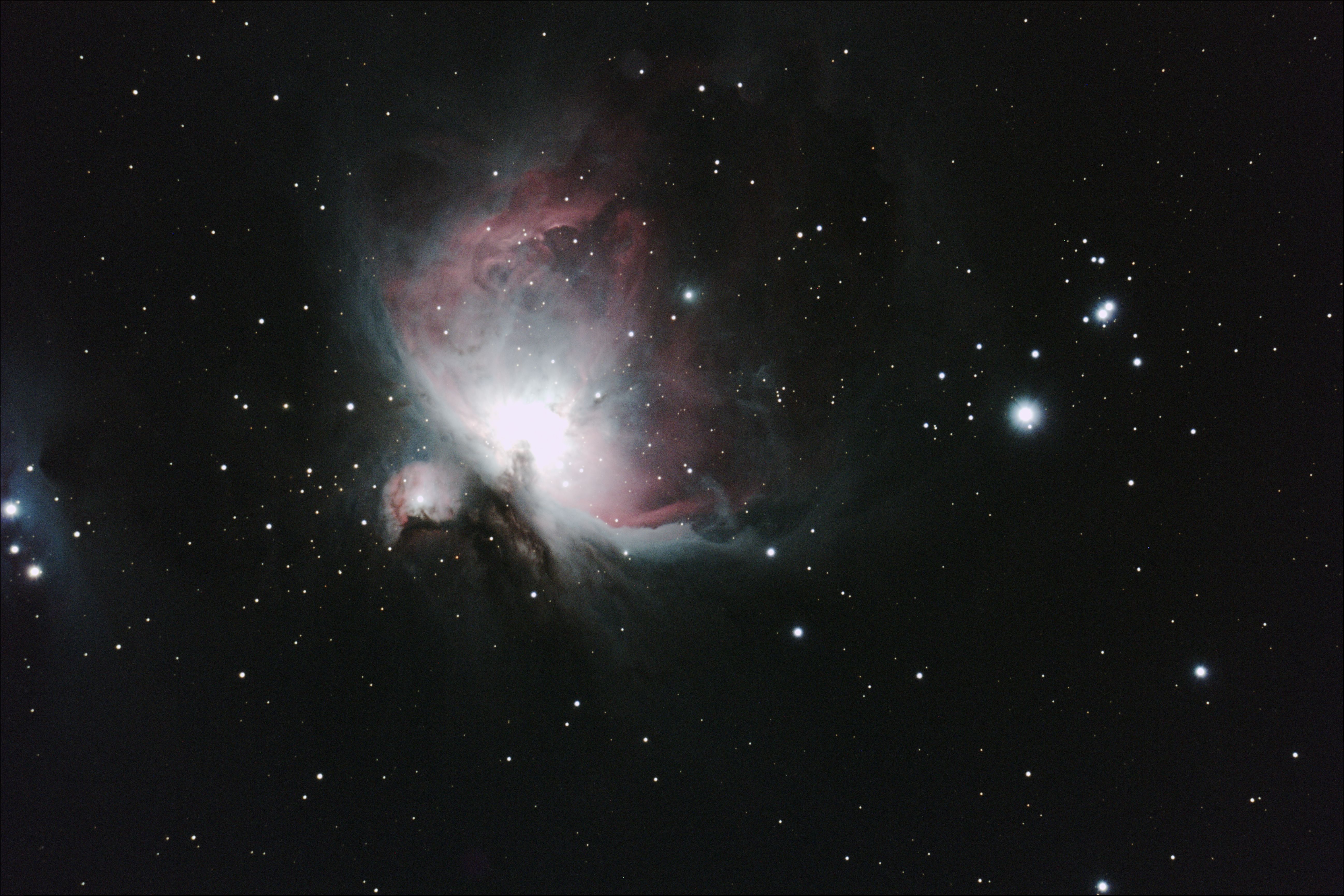
Orion Nebula M42 in Orion.
5:15 am 28th July, 2012.
Labrador.
ED 120 mm auto-guided.
Canon 550D ISO 1600.
3 min x 3 RAW, 6 flats.
This was very satisfying but the over-exposed centre of the nebula reminded me that there are some processing methods to be learned about improving that sort of thing and I decided it was time to review it. I considered that my “RAW” and “Dark” phase was now launched.