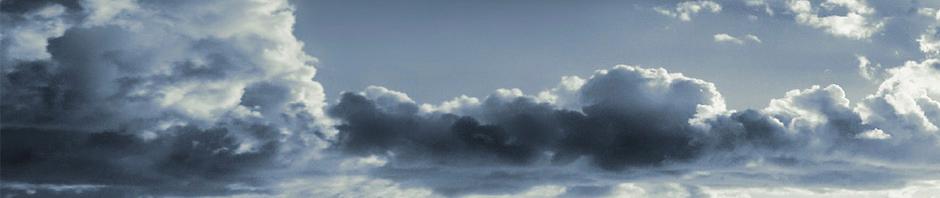
The Orion Nebula M42 looks nice when the exposure is sufficient to show all the neat nebulosity and dark clouds. When you show people the picture, you explain that the nebula is brightened by the central stars which you can’t actually see because that area of the picture is over-exposed. This is not good !
Over the years, the Orion Nebula M42 has often been the object used to demonstrate the processing methods for this situation, which is called High Dynamic Range (HDR). Once a subject gets its own TLA (three letter acronym), you know people are getting serious about it. Reviewing the current options for HDR processing, it appeared the choices included Photoshop using masking, Photoshop using an HDR function or any one of a range of specialist HDR processing programs. Since masking is lengthier than using an HDR function and Photoshop is more expensive than anything else, I elected to purchase a copy of the Mac version of Photomatix Pro from http://www.hdrsoft.com.
The general method is to take a set of shots, then take an over-exposed set and an under-exposed set ; process the 3 sets into 3 shots; put the 3 shots at the 3 exposures into Photomatix Pro, press the red button and it’s all done. At least, that’s the theory 
At 4 am on 8th August, 2012, I went outside to start getting shots of the Orion Nebula M42 to test this out.
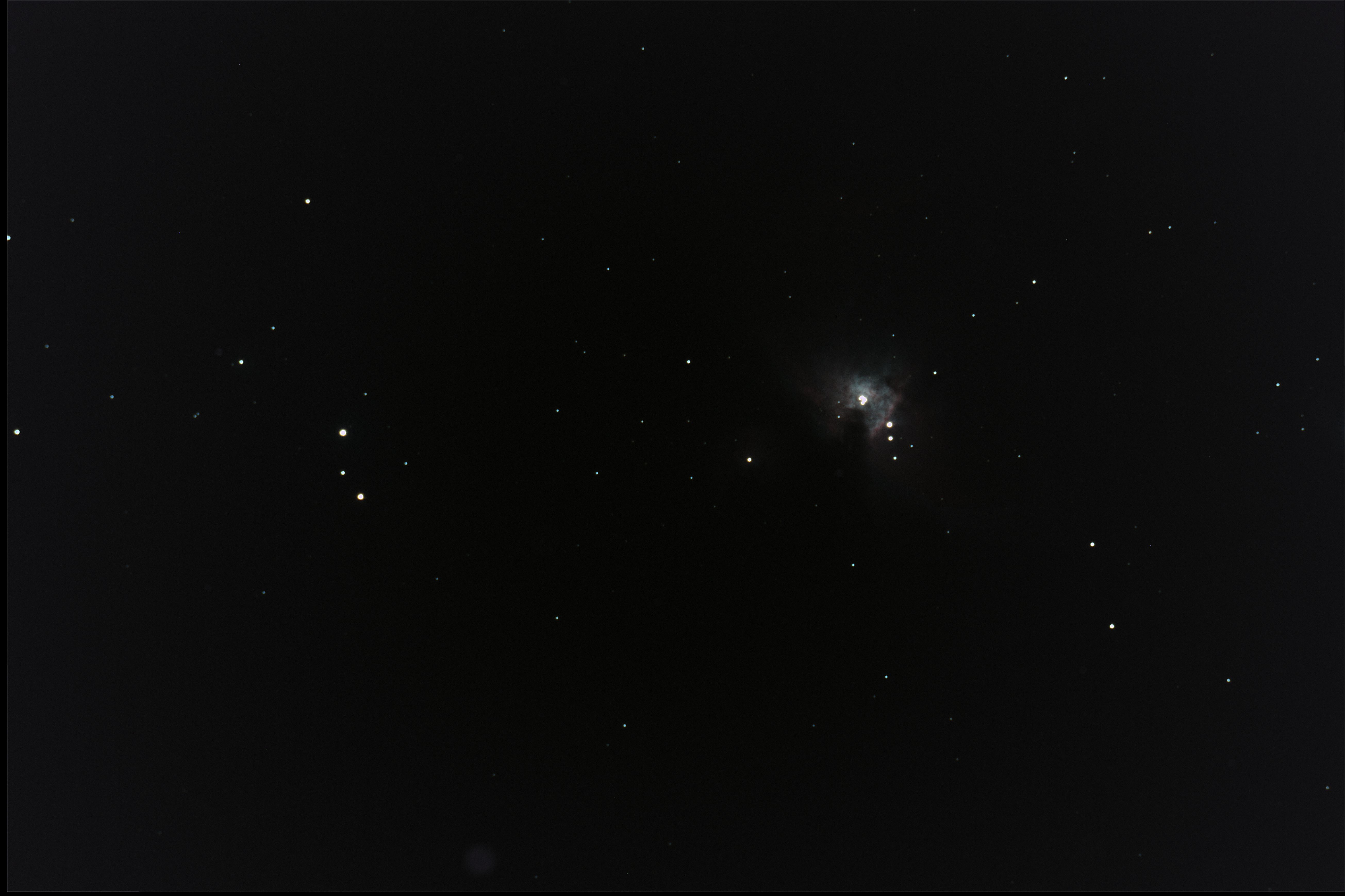
Orion Nebula M42 in Orion.
4:41 am 8th August 2012.
Labrador.
ED 120 mm auto-guided.
Canon 550D ISO 1600.
15 sec x 10 RAW, 6 x Flats
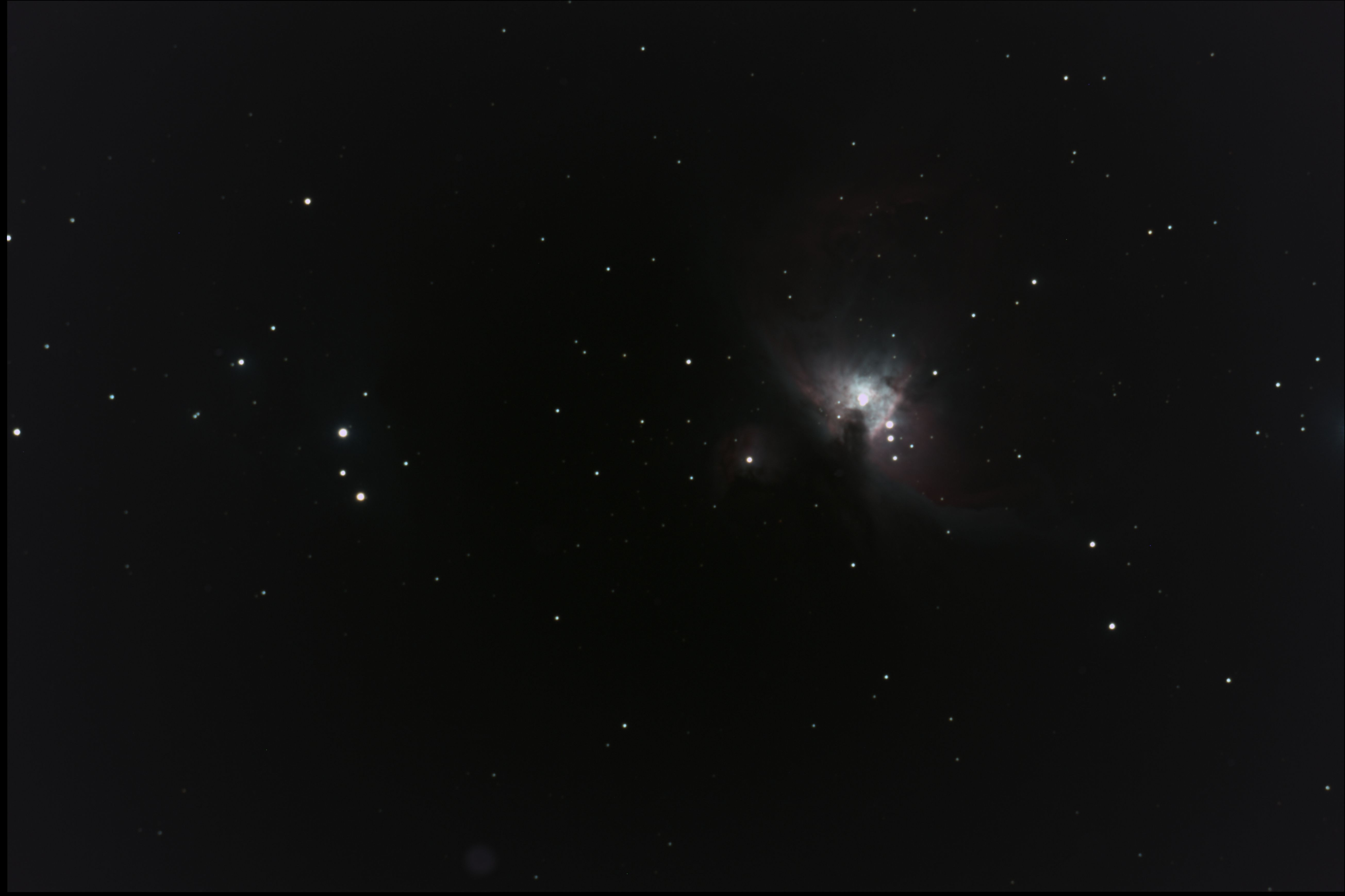
Orion Nebula M42 in Orion.
4:47 am 8th August 2012.
Labrador.
ED 120 mm auto-guided.
Canon 550D ISO 1600.
60 sec x 8 RAW, 6 x Flats
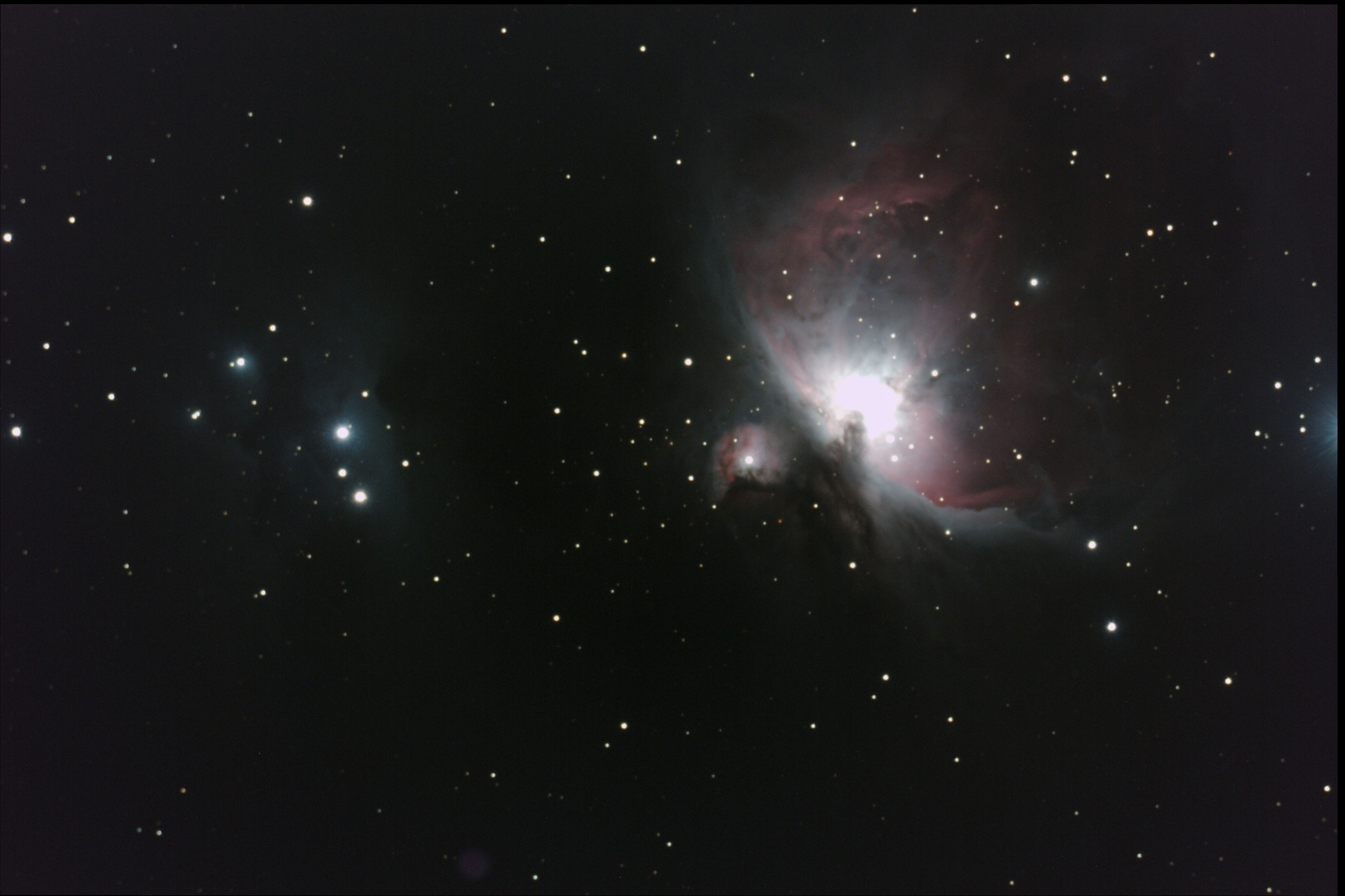
Orion Nebula M42 in Orion.
5:01 am 8th August 2012.
Labrador.
ED 120 mm auto-guided.
Canon 550D ISO 1600.
240 sec x 4 RAW, 6 x Flats
I actually took 10 shots at 60 seconds but 2 shots failed the quality check. I took 6 shots at 240 seconds but pre-dawn light affected the last 2 of those. The remaining shots were stacked and processed in Nebulosity. The 3 processed shots were then saved as 16 bit “tiff” files and aligned in Nebulosity as if for stacking but the “Save each file” option was selected. The “tiff” files were then loaded into Photomatix Pro, which does not accept the “fits” files that Nebulosity works in. The Exposure Values were set at – 2 : 0 : +2 in Photomatix Pro and the result below emerged when set to “Natural”.
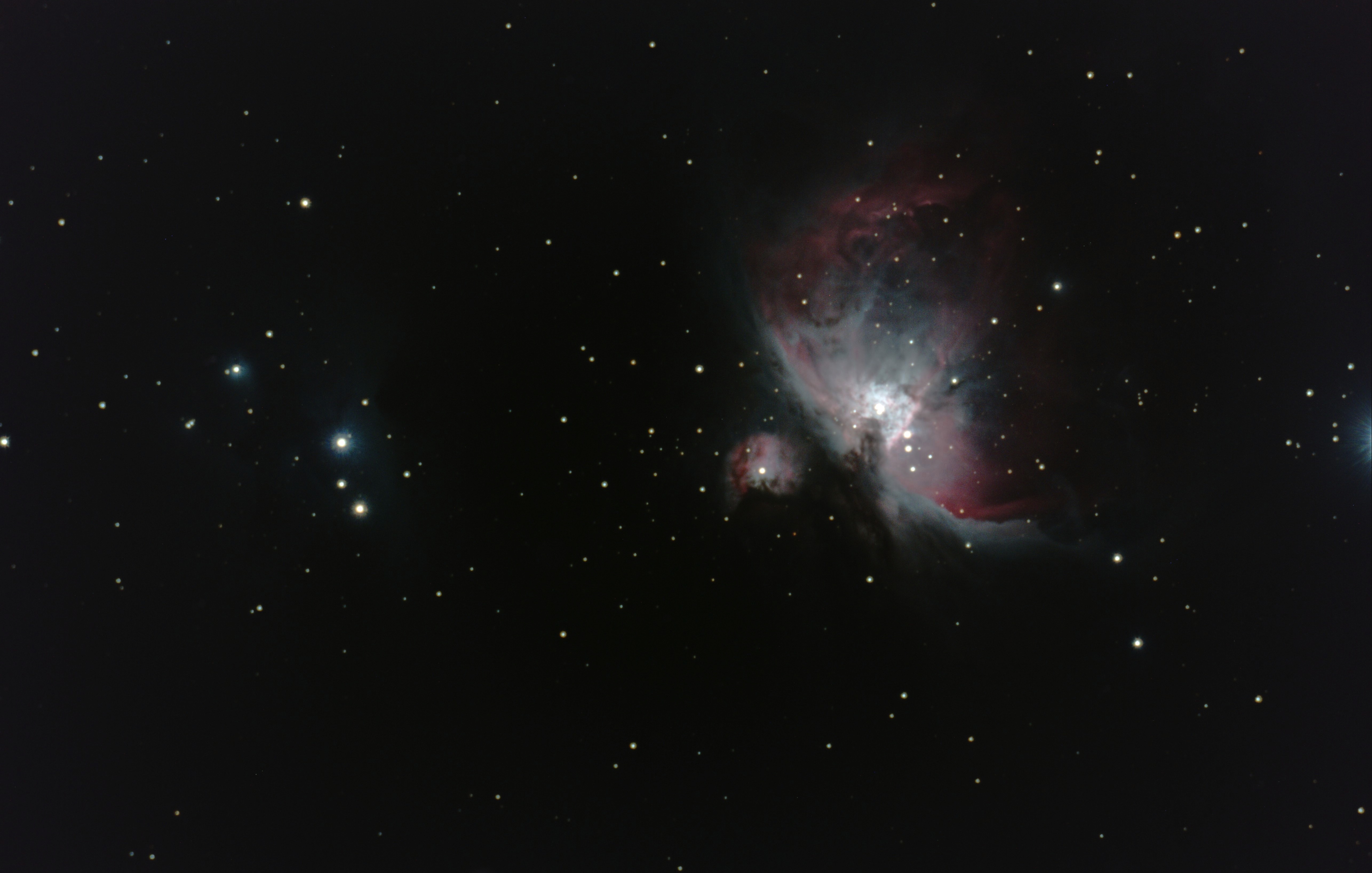 Orion Nebula M42 in Orion.
4:41 am 8th August 2012.
Labrador.
ED 120 mm auto-guided.
Canon 550D ISO 1600.
15 s x 10, 60 s x 8, 240 s x 4 RAW, 6 x Flats, processed in Nebulosity, HDR fusion in Photomatix Pro
This almost instant fusion method revealed the central stars while retaining most .. but not all .. of the nebulosity in the longest exposure. I decided to test other objects with the intention of strongly over-exposing the longest shot to capture as much detail as possible.
Using ISO 1600, I had already captured 3 minute (x6) and 6 minute (x6) exposures of the Omega Nebula M17 the night before but I still needed an over-exposed set so that night I set out to get 10 minutes x 6 but the camera battery died after 5 shots. I tried 15 minute exposures but that exceeded the light pollution limit even with the nearby football stadium having a night off.
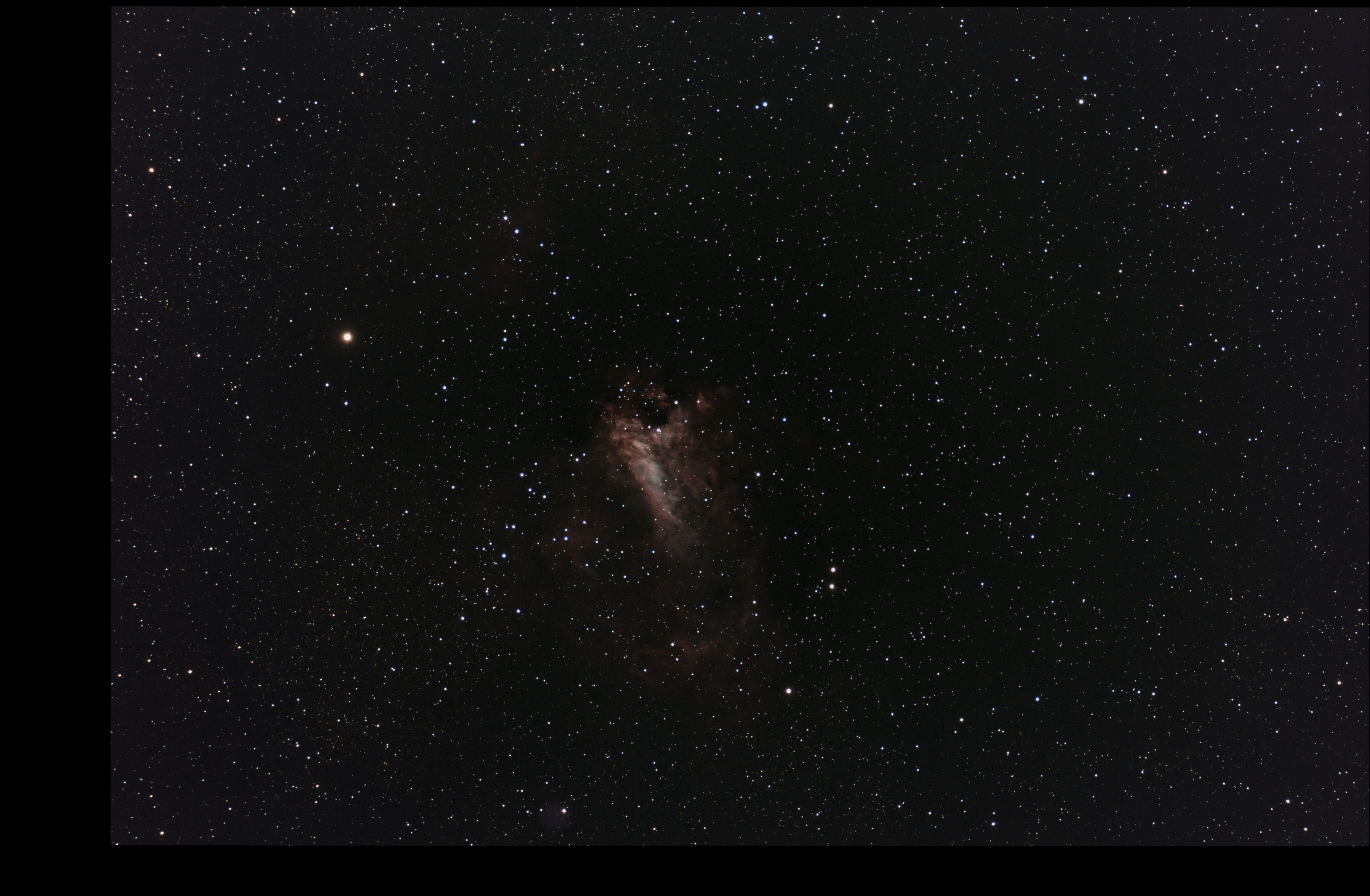
Omega Nebula M17 in Sagittarius.
7:16 pm 7th August 2012.
Labrador.
ED 120 mm auto-guided.
Canon 550D ISO 1600.
3 min x 6 RAW, 10 x Flats
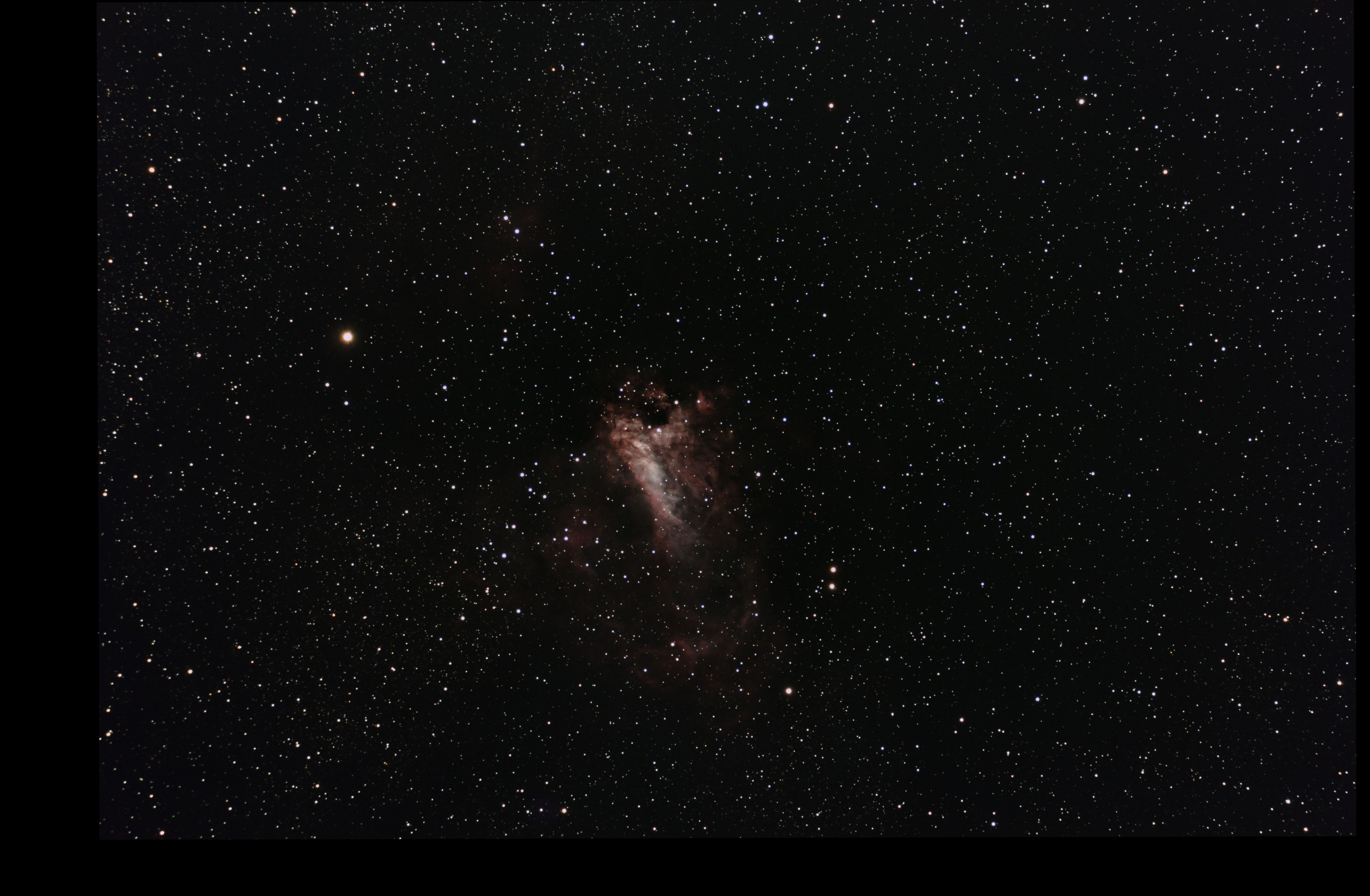 Omega Nebula M17 in Sagittarius.
8:52 pm 7th August 2012.
Labrador.
ED 120 mm auto-guided.
Canon 550D ISO 1600.
6 min x 6 RAW, 10 x Flats. 6 x Darks.
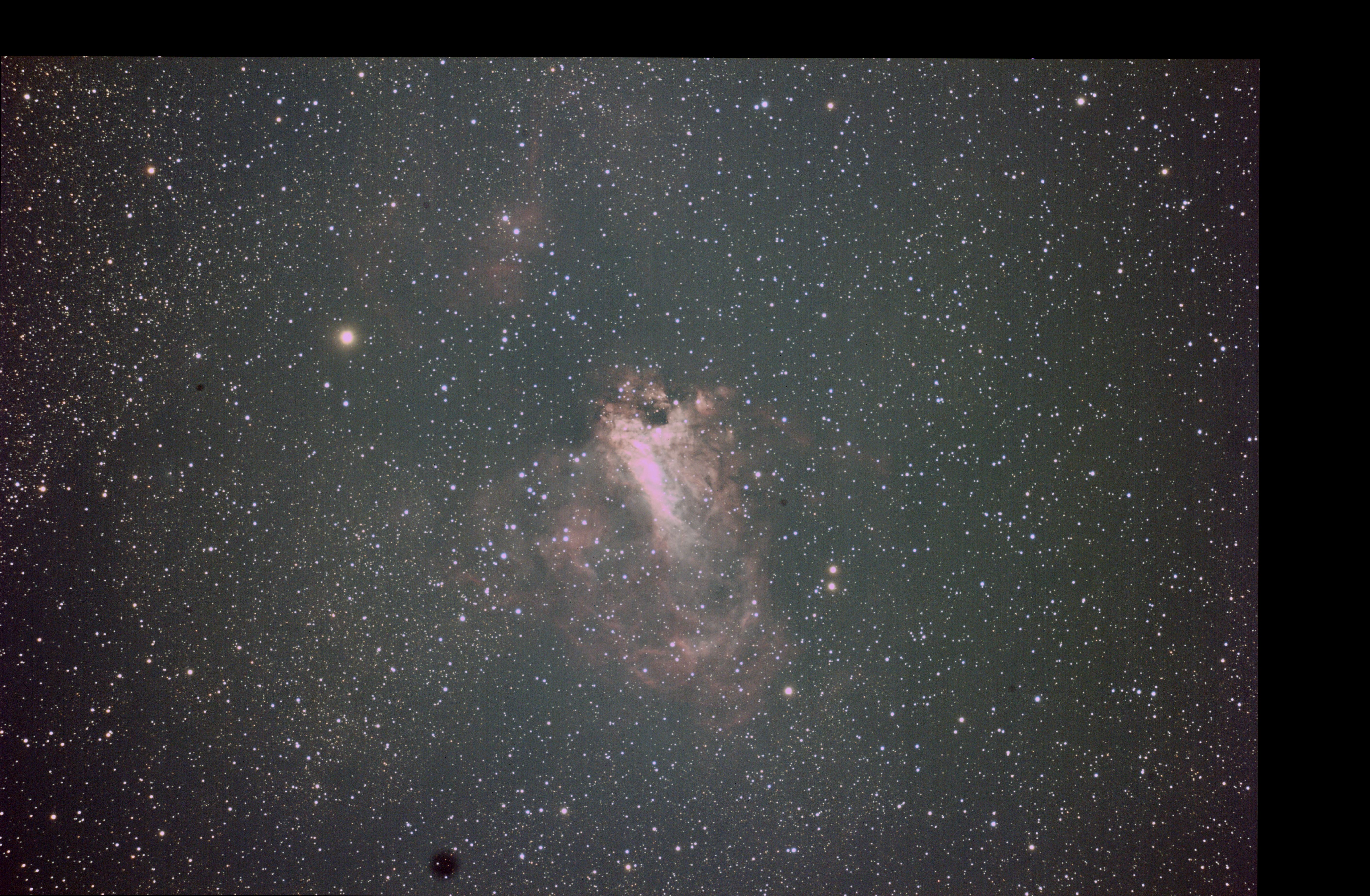
Omega Nebula M17 in Sagittarius.
7:20 pm 8th August 2012.
Labrador.
ED 120 mm auto-guided.
Canon 550D ISO 1600.
10 min x 4 RAW, 10 x Flats. 6 x Darks.
The odd borders arise because the 3 shots over 2 nights have to be aligned but not cropped for the fusion process in Photomatix Pro.
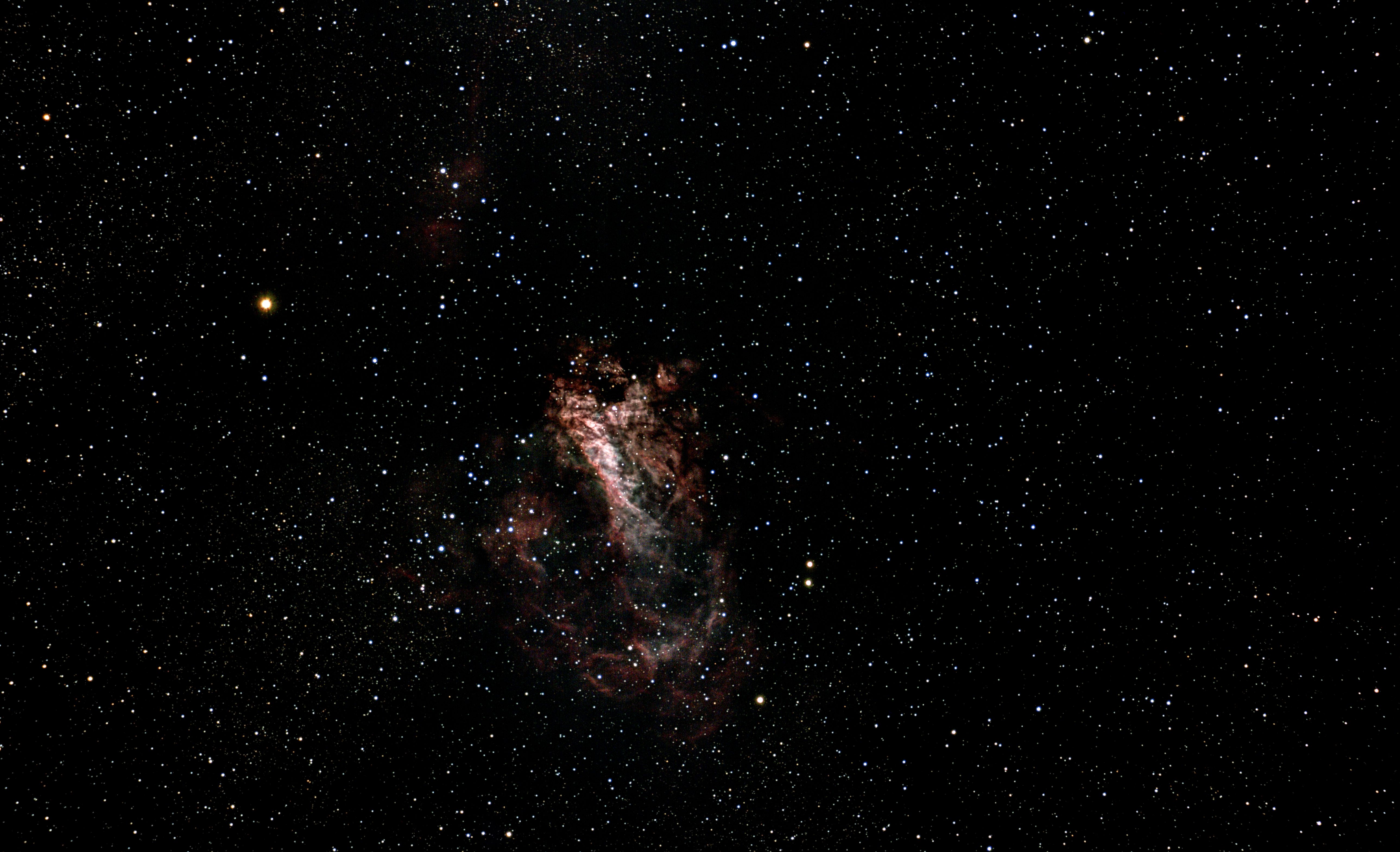 Omega Nebula M17 in Sagittarius.
7th & 8th August 2012.
Labrador.
ED 120 mm auto-guided.
Canon 550D ISO 1600.
3 min x 6, 6 min x 6, 10 min x 5 RAW. HDR Fusion.
The selective retention of the nebulosity and omission of the light pollution was very marked in this fusion experiment. The lower loop of nebulosity was only visible in the over-exposed image yet the stars and dark background were more like the shorter exposures.
On the 13th August 2012, I tried the same exposure times (3 min, 6 min and 10 min) on the Lagoon Nebula M8. Being at the zenith, I ran into a little problem after 3 of the 10 min shots .. or rather the scope did. It hit the tripod leg and started slipping its gears. I rescued it and no damage seemed to have occurred.
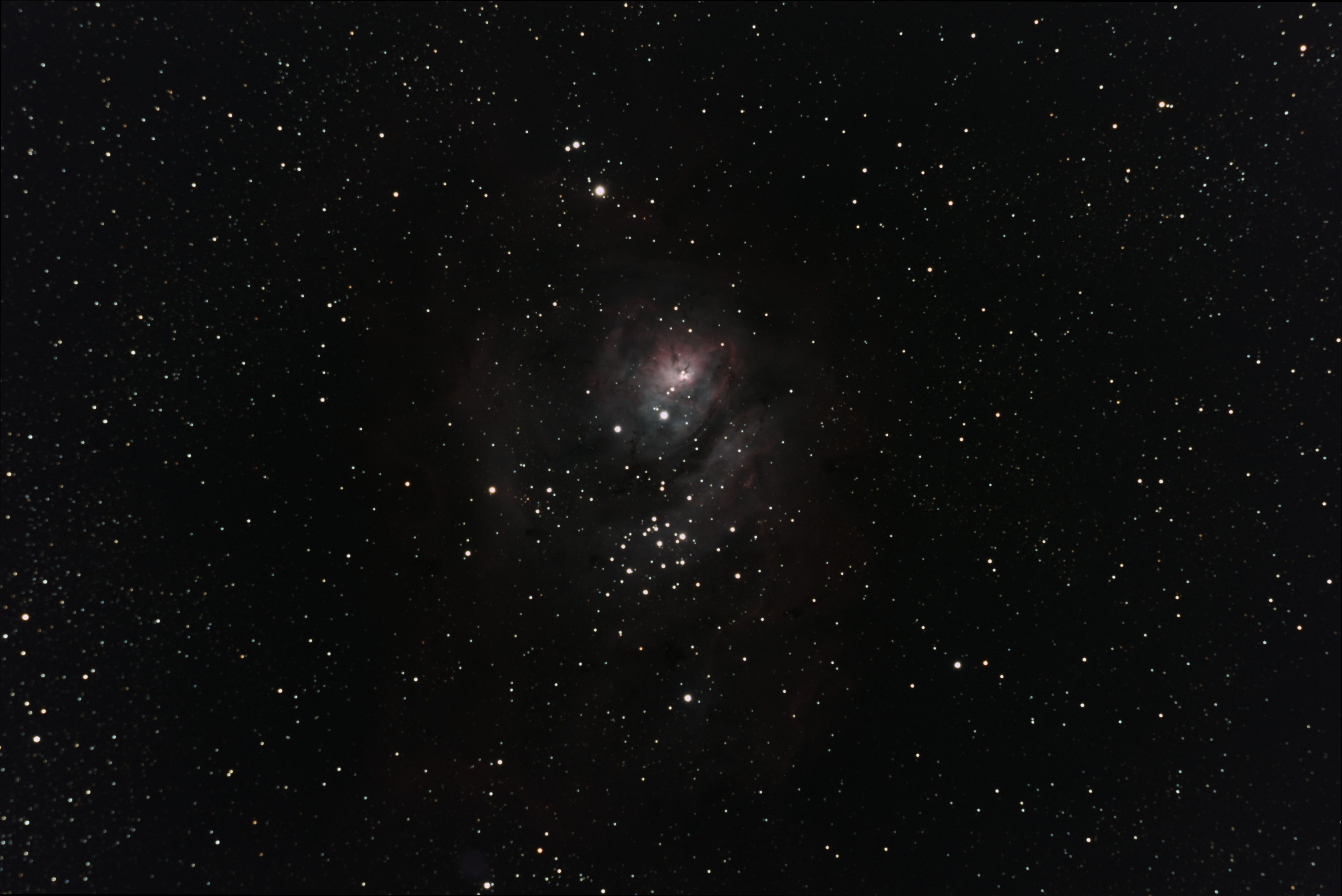 Lagoon Nebula M8 in Sagittarius.
8:33 pm 13th August 2012.
Labrador.
ED 120 mm auto-guided.
Canon 550D ISO 1600.
3 min x 6 RAW, 10 x Flats.
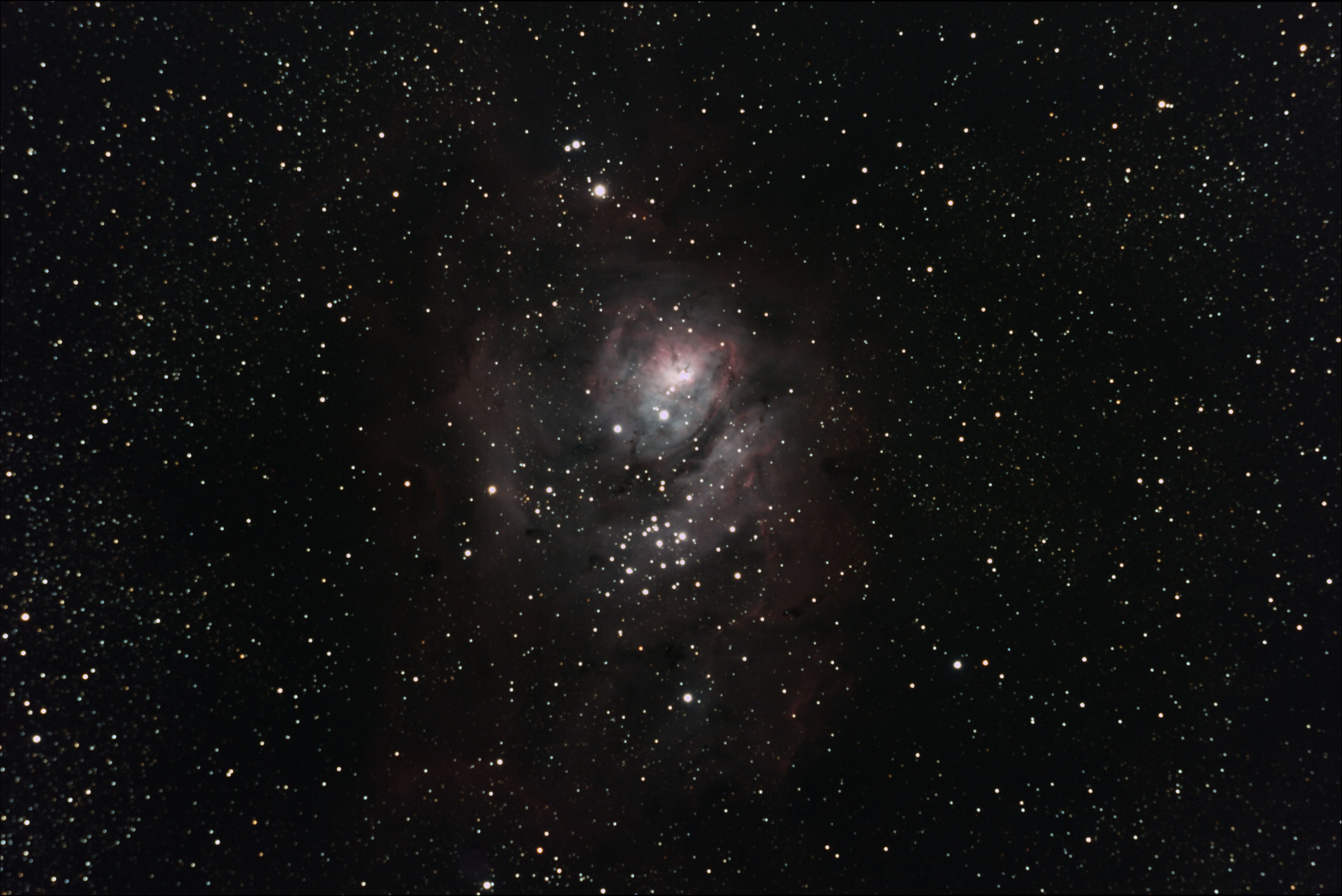 Lagoon Nebula M8 in Sagittarius.
8:54 pm 13th August 2012.
Labrador.
ED 120 mm auto-guided.
Canon 550D ISO 1600.
6 min x 6 RAW, 10 x Flats. 6 x Darks.
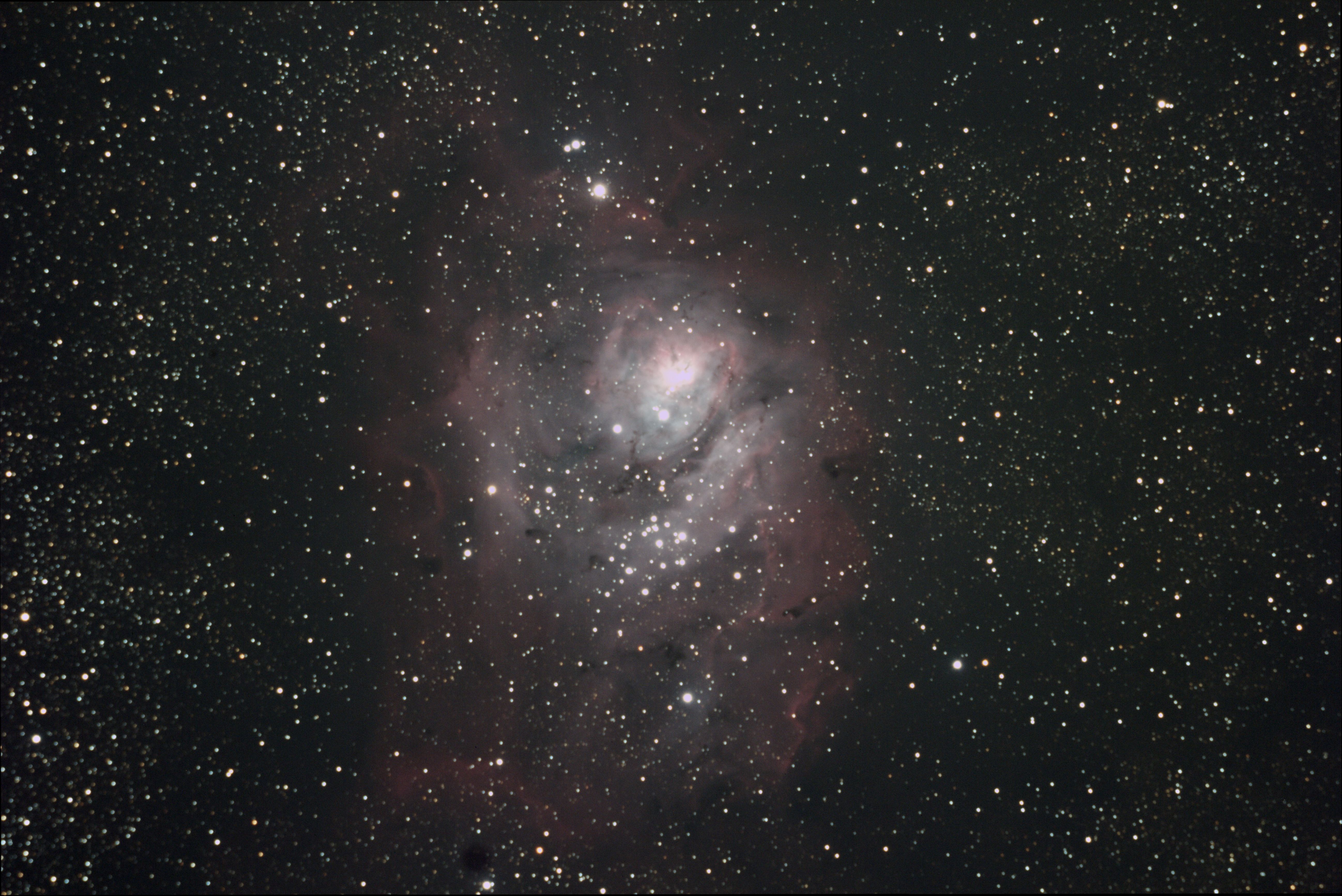 Lagoon Nebula M8 in Sagittarius.
9:30 pm 13th August 2012.
Labrador.
ED 120 mm auto-guided.
Canon 550D ISO 1600.
10 min x 3 RAW, 10 x Flats. 5 x Darks.
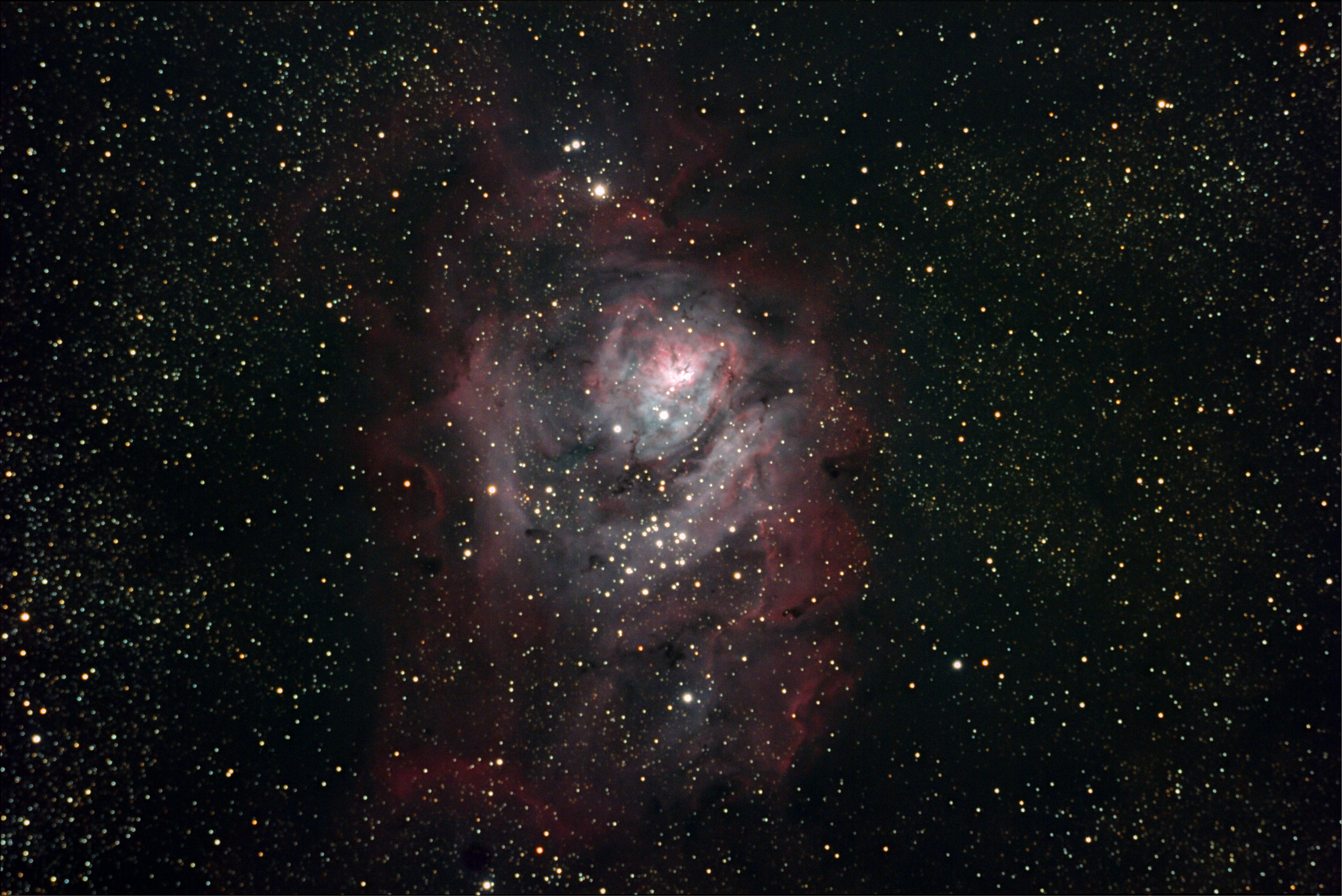 Lagoon Nebula M8 in Sagittarius.
13th August 2012.
Labrador.
ED 120 mm auto-guided.
Canon 550D ISO 1600.
3 min x 6, 6 min x 6, 10 min x 3. HDR Fusion.
Again, HDR Fusion of the 3 images in Photomatix Pro produced a better result than any one exposure time could have produced. On 14th August 2012, I tried 3, 6 and 12 minutes at ISO1600 to the Trifid Nebula M20 in Sagittarius, this time without driving the mount past its limit.
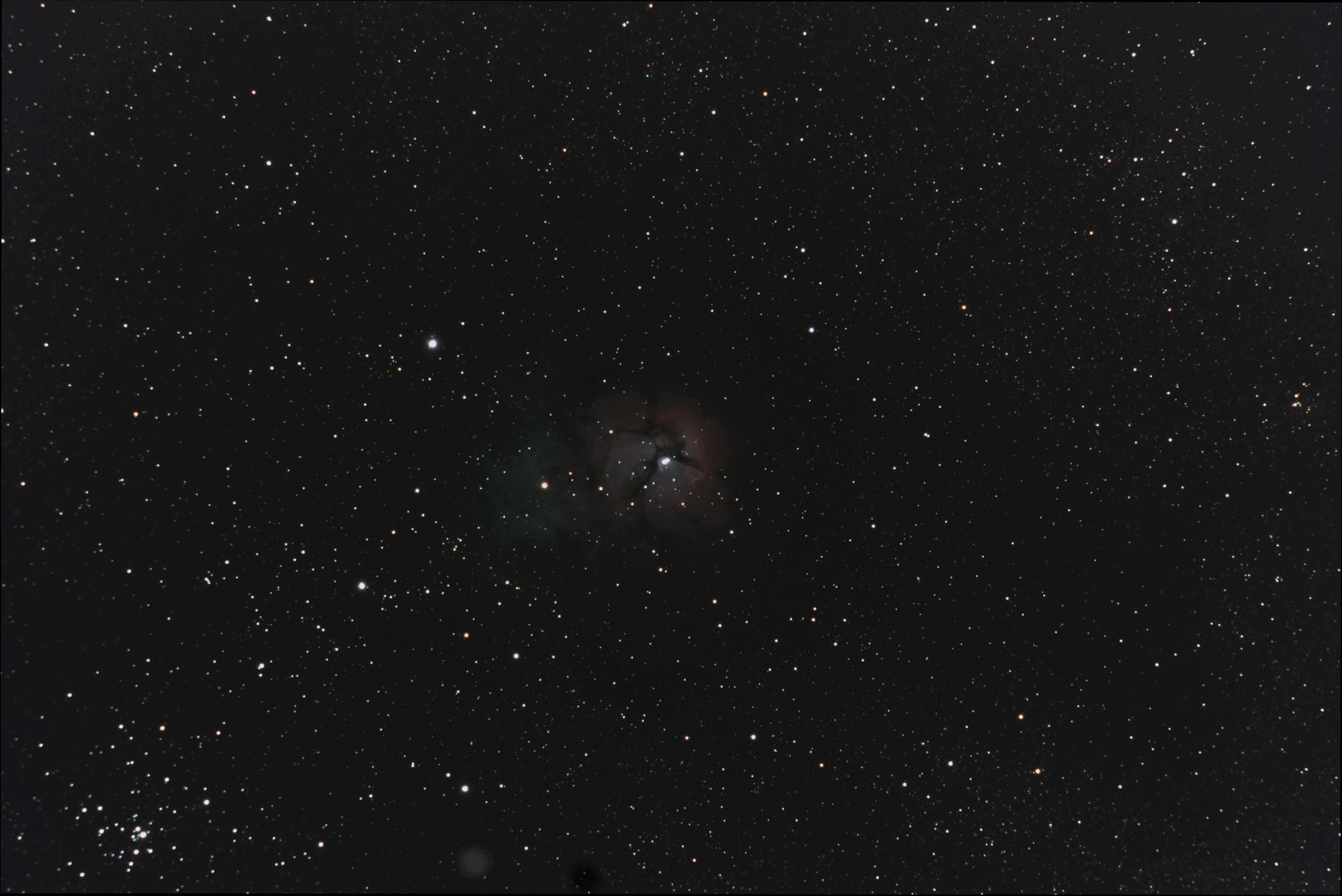 Trifid Nebula M20 in Sagittarius.
7:22 pm 14th August 2012.
Labrador.
ED 120 mm auto-guided.
Canon 550D ISO 1600.
3 min x 8 RAW, 10 x Flats.
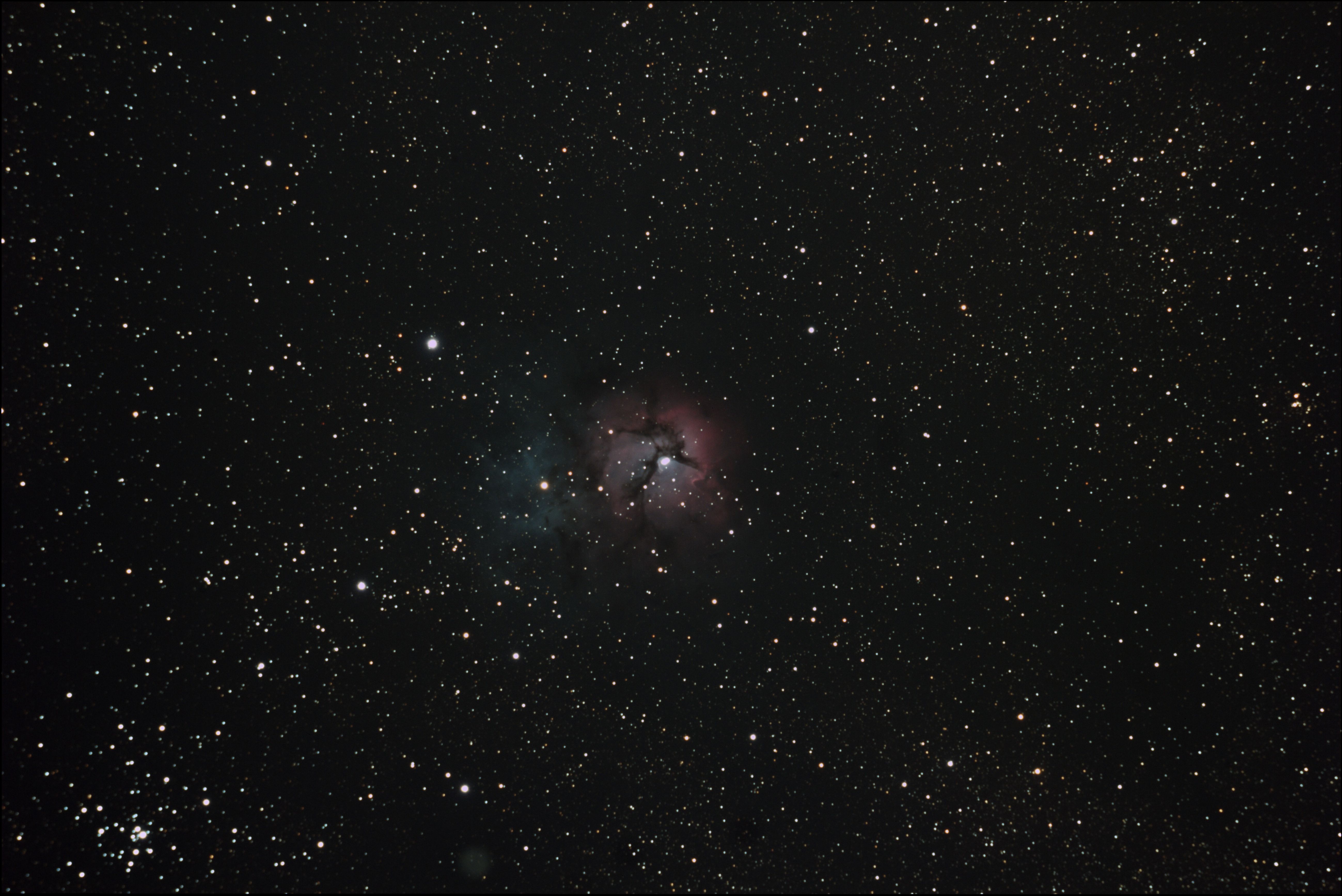 Trifid Nebula M20 in Sagittarius.
7:50 pm 14th August 2012.
Labrador.
ED 120 mm auto-guided.
Canon 550D ISO 1600.
6 min x 6 RAW, 10 x Flats. 6 x Darks.
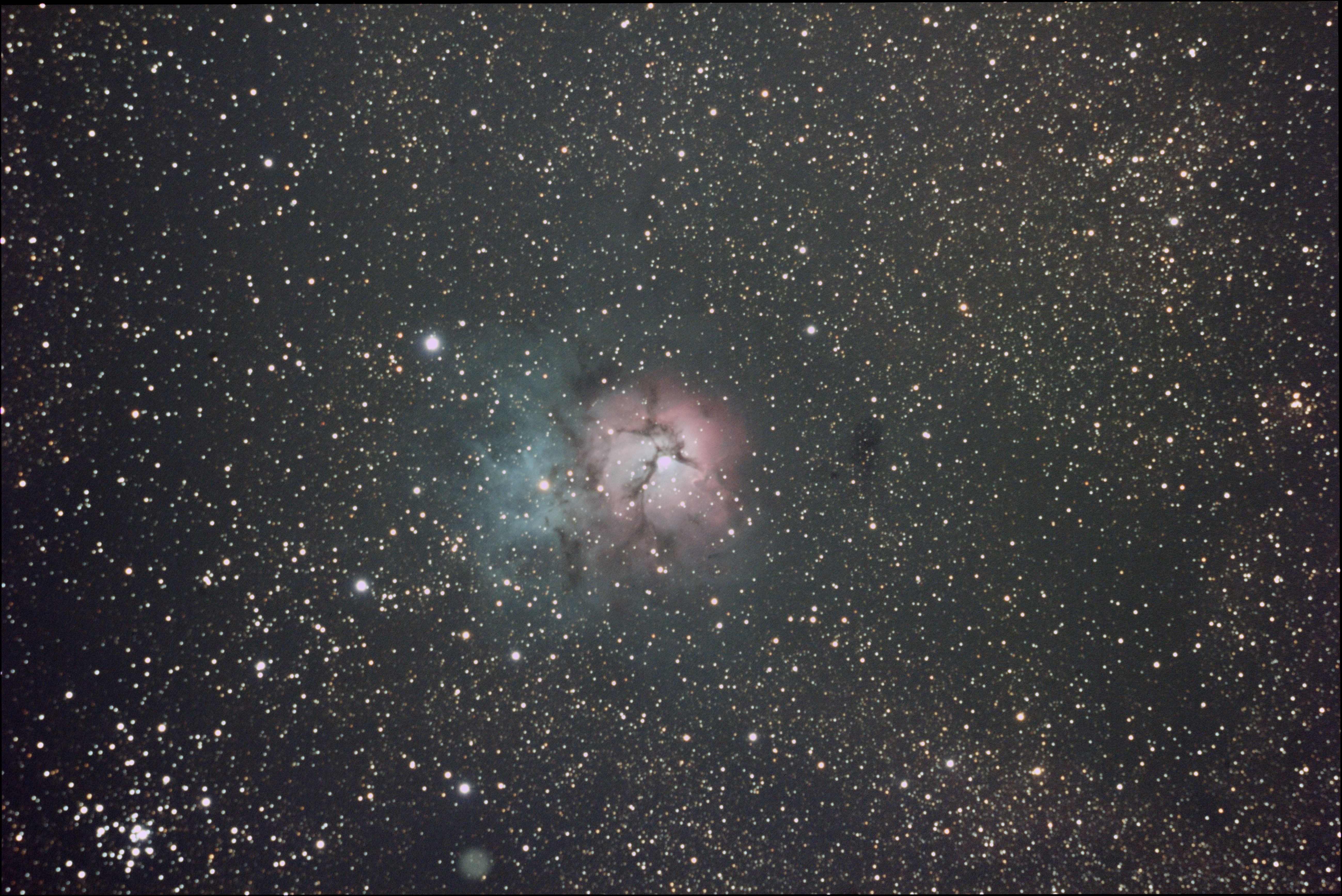 Trifid Nebula M20 in Sagittarius.
8:32 pm 14th August 2012.
Labrador.
ED 120 mm auto-guided.
Canon 550D ISO 1600.
12 min x 5 RAW, 10 x Flats. 5 x Darks.
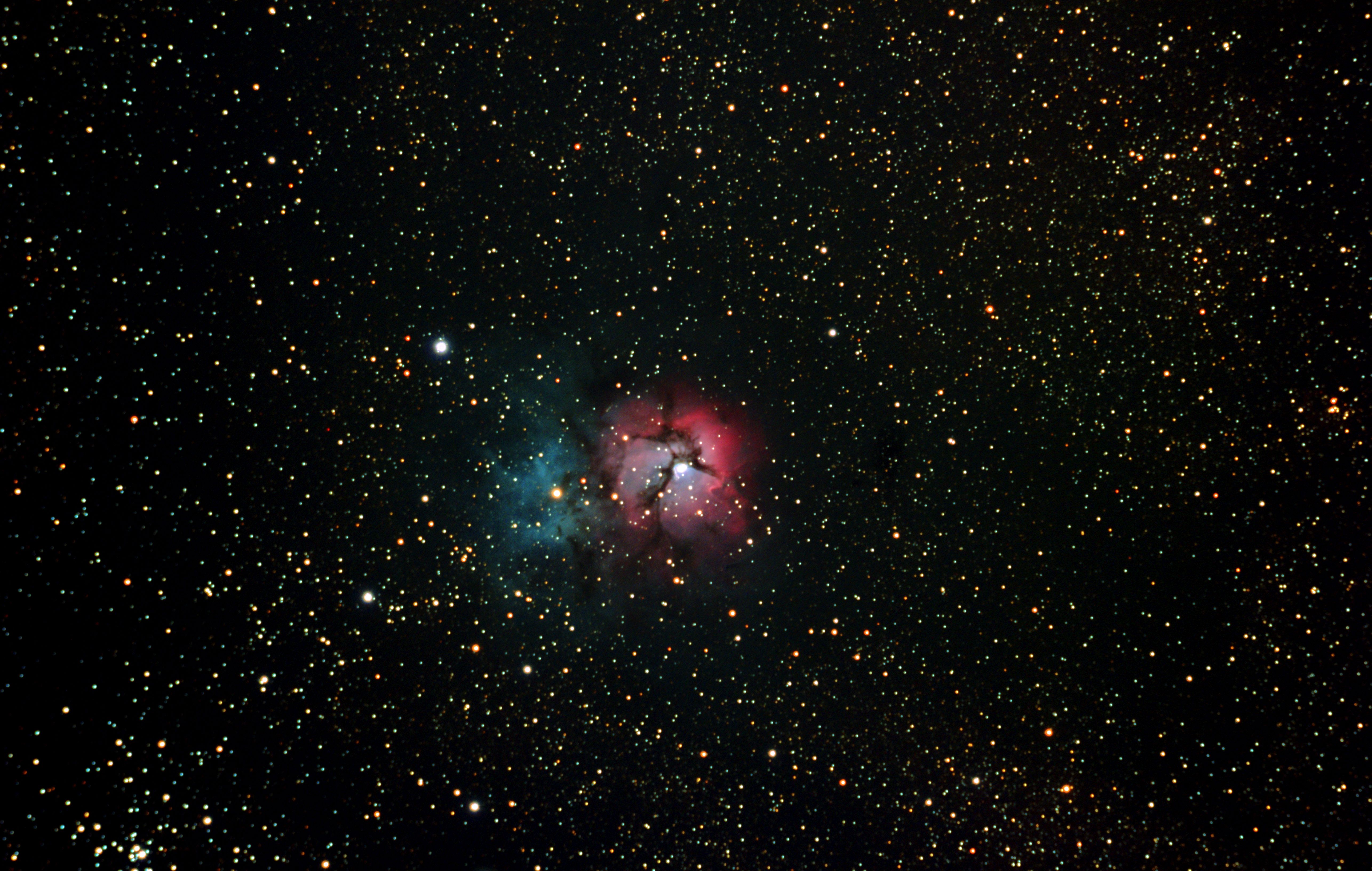 Trifid Nebula M20 in Sagittarius.
14th August 2012.
Labrador.
ED 120 mm auto-guided.
Canon 550D ISO 1600.
3 min x 8, 6 min x 6, 12 min x 5. HDR Fusion.
The HDR processing again gave me my nicest image of the Trifid Nebula so far. This image did, however, have me wishing that it was the nebulosity that was over-exposed in the longest exposure rather than the light pollution. That will have to wait till I can get to a dark sky site. The next night, 15th August 2012, I applied the same regime of exposures to the Eagle Nebula M16 in Sagittarius.
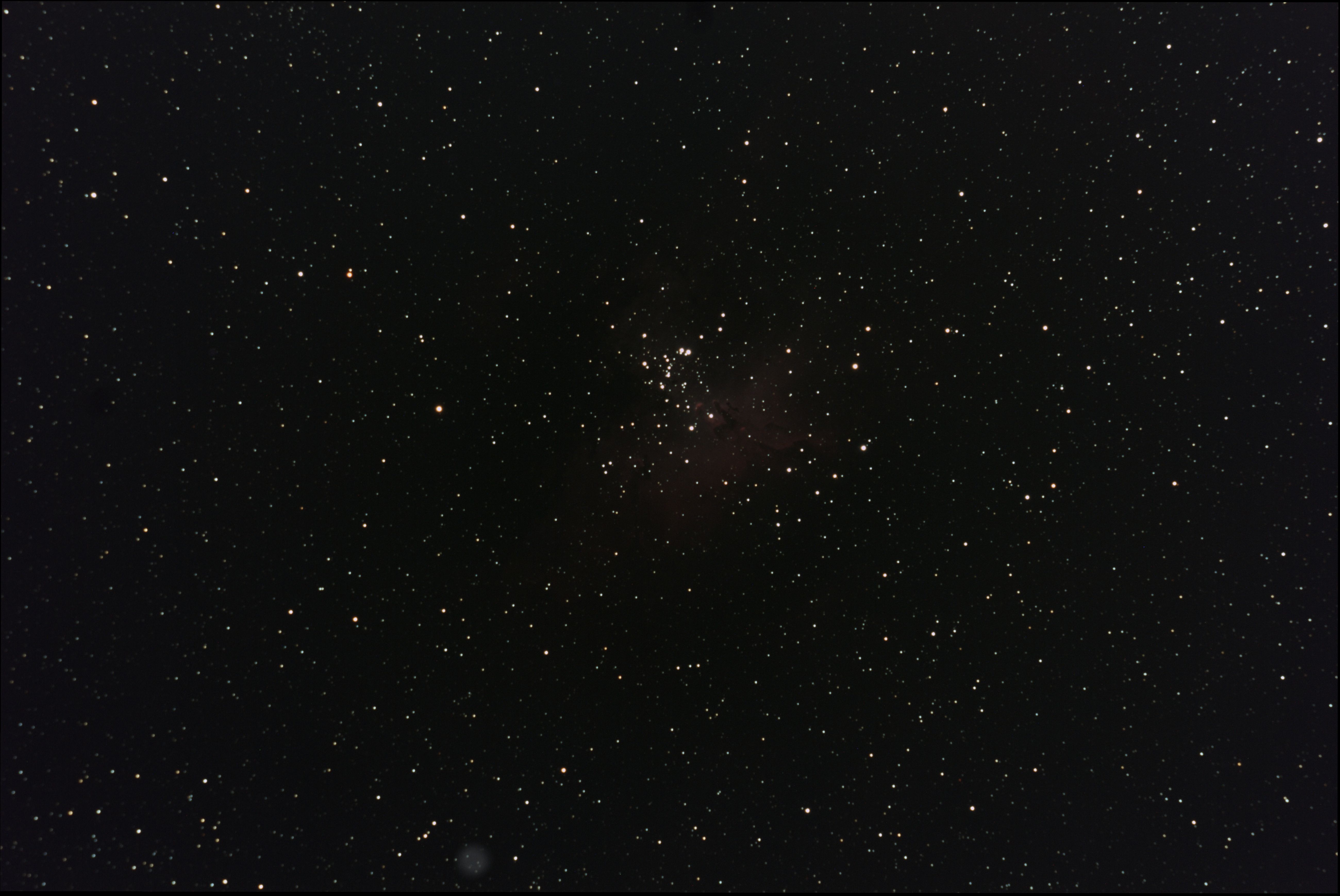
Eagle Nebula M16 in Sagittarius.
6:50 pm 15th August 2012.
Labrador.
ED 120 mm auto-guided.
Canon 550D ISO 1600.
3 min x 10 RAW, 10 x Flats.
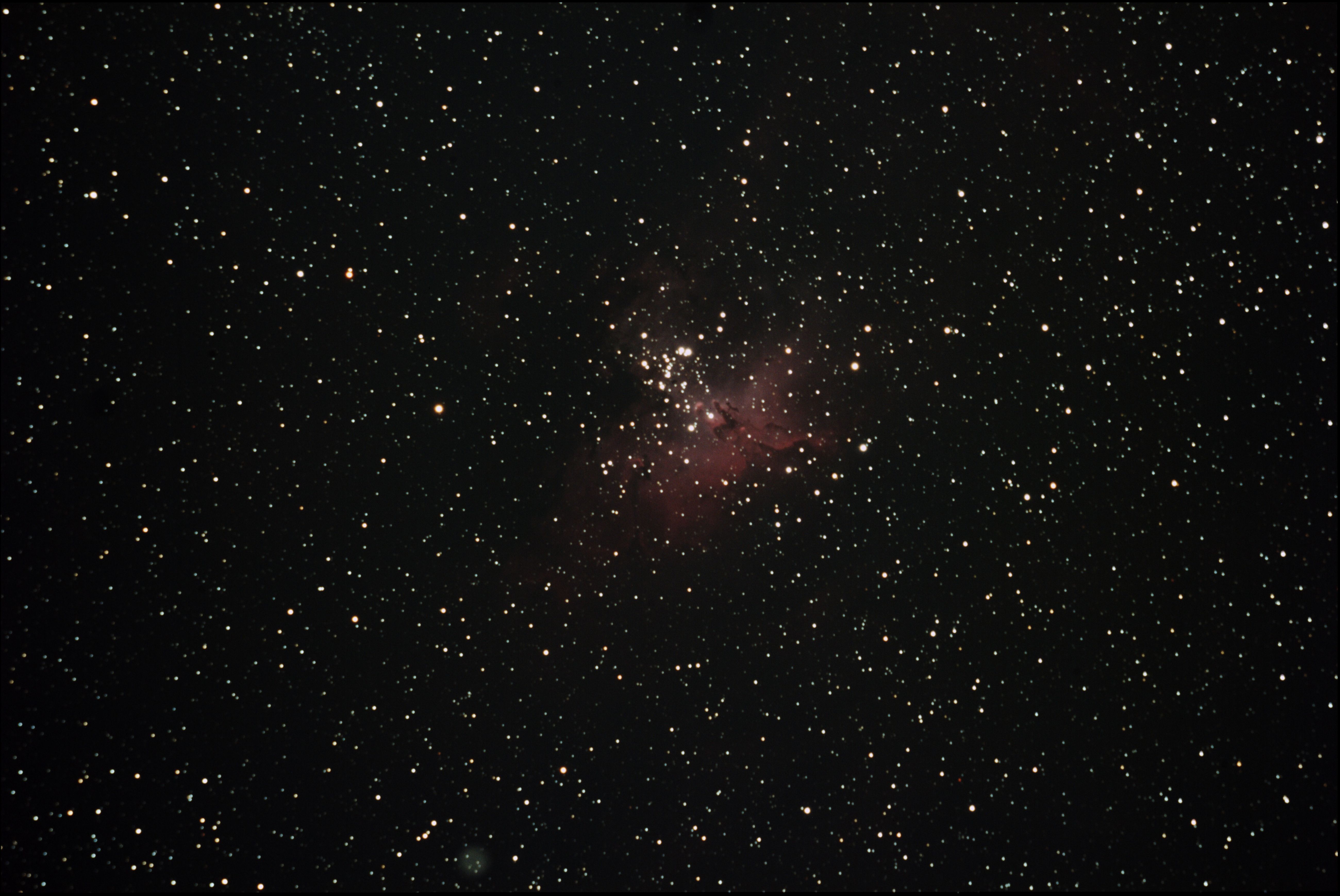 Eagle Nebula M16 in Sagittarius.
7:24 pm 15th August 2012.
Labrador.
ED 120 mm auto-guided.
Canon 550D ISO 1600.
6 min x 8 RAW, 10 x Flats. 6 x Darks.
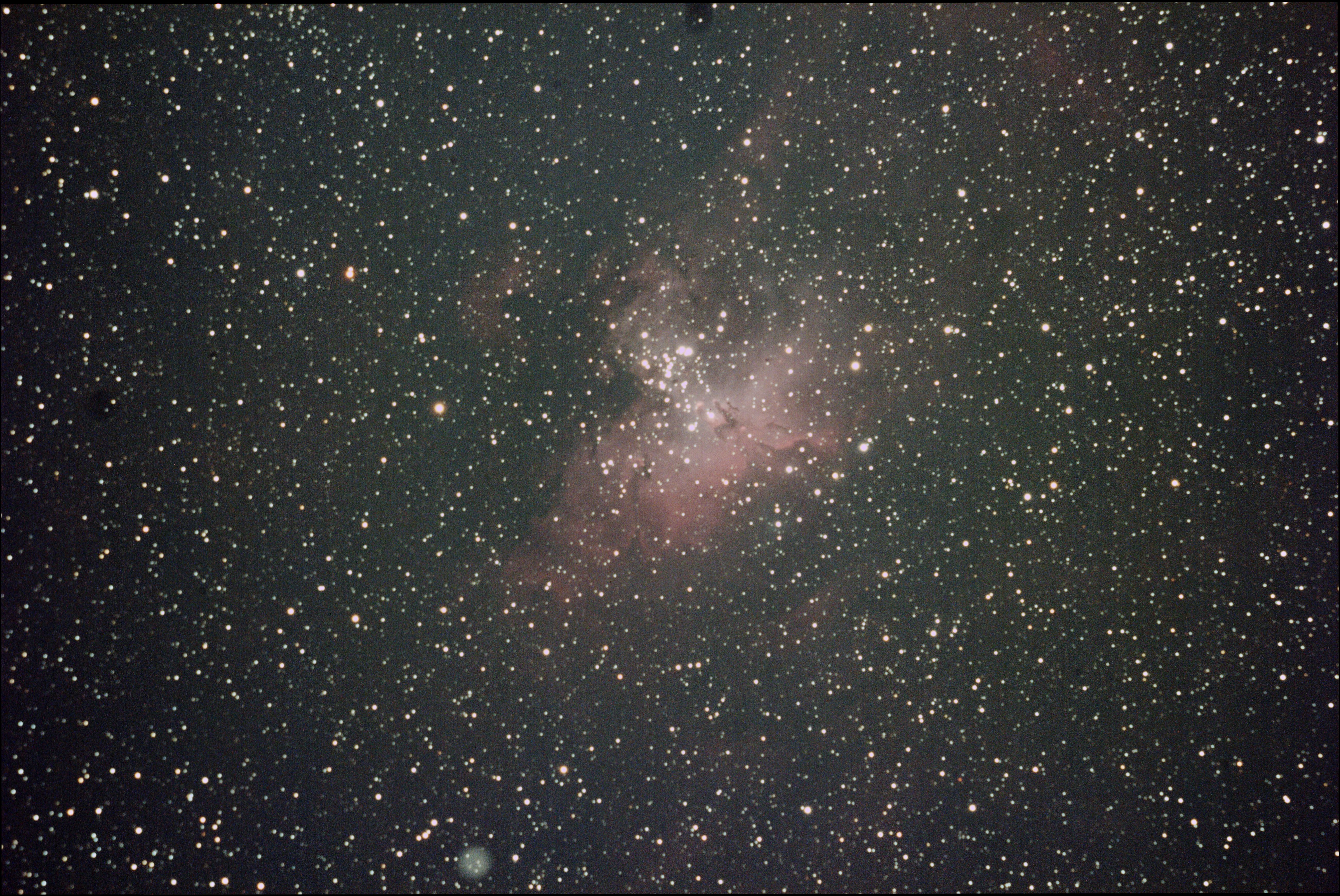 Eagle Nebula M16 in Sagittarius.
8:15 pm 15th August 2012.
Labrador.
ED 120 mm auto-guided.
Canon 550D ISO 1600.
12 min x 4 RAW, 10 x Flats. 5 x Darks.
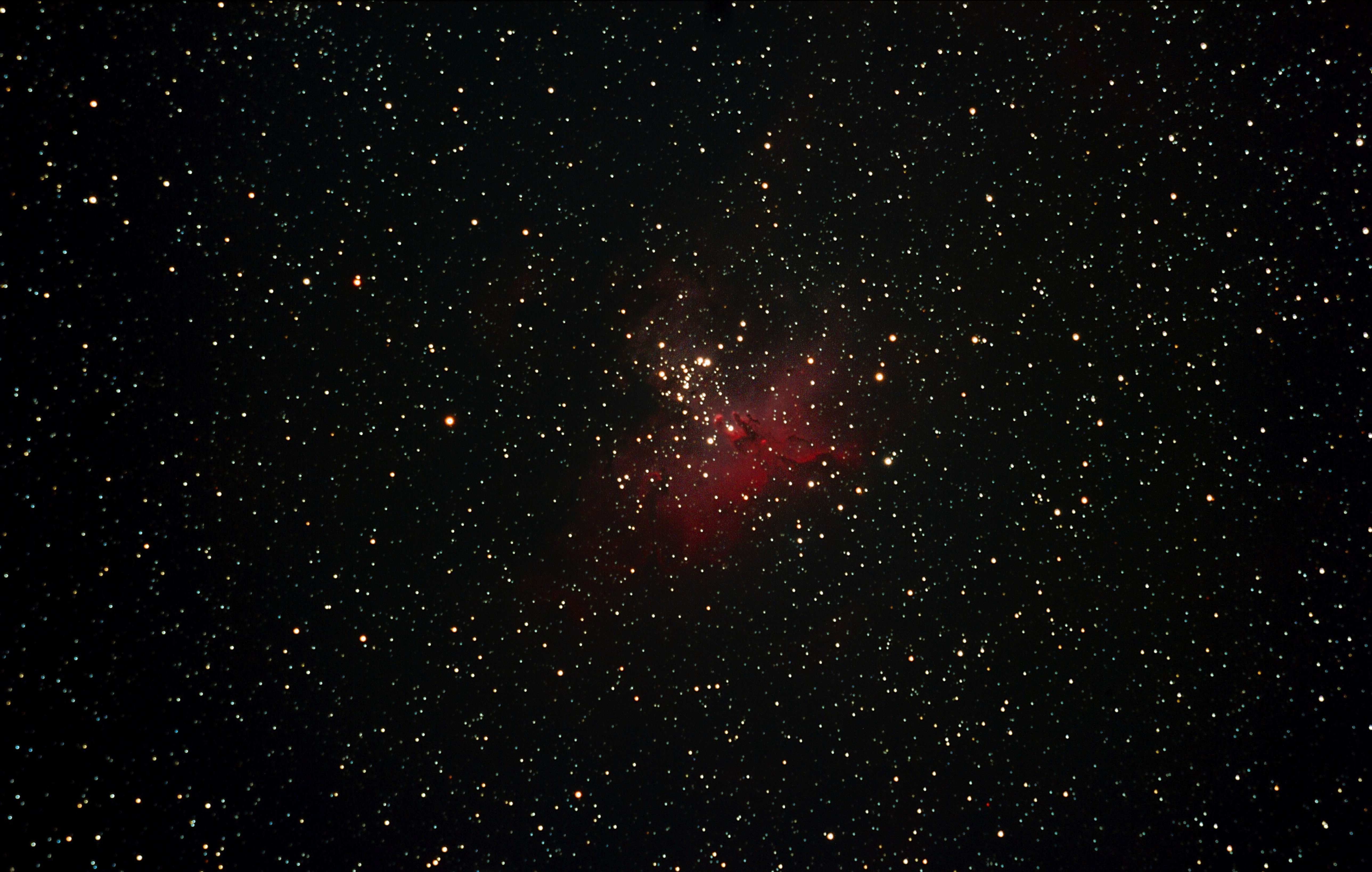 Eagle Nebula M16 in Sagittarius.
15th August 2012.
Labrador.
ED 120 mm auto-guided.
Canon 550D ISO 1600.
3min x 10, 6 min x 8, 12 min x 3. HDR Fusion
I had attempted 6 of the 12 min exposures but 3 of them had movement, possibly from operating so close to a major road with heavy trucks. The net result was better than I expected from an inner city environment.
By this time, I felt that the HDR fusion processing method would have lots of application for many deep sky objects and it would be interesting to see it applied to images from a dark site where light pollution was not limiting the exposure time.