Join the Club
In mid-2011, O’Reilly’s Guest House (in the mountains on the Queensland – New South Wales border) put on a Stargazer’s Weekend which I attended. The speaker was Noeleen Lowndes, NASA’s representative for the Saturn Observation Campaign and current President of the Southern Astronomical Society, based south of Brisbane, Queensland. As a result of her enthusiasm, I joined the Southern Astronomical Society in November 2011. At about the same time, it started to rain and continued to do so with only short pauses for the next 6 months. Not what you expect when you live on the driest inhabited continent on the planet – the scientists in Antarctica (which is drier) are not considered to have a life and are therefore not really inhabiting the place.
Initial purchases
In December 2011, I made my first moves, buying:
- a Canon 550D DSLR camera and a 50mm f/1.8 II lens for it
- a modest tripod
- a MacBook Air to which the camera could be attached
- a Mac program called Nebulosity to control the camera http://www.stark-labs.com/nebulosity.html
- an iPad app called SkySafari Pro
By avoiding telescopes completely, I thought I could just have a tentative look at the stars and I could always use the camera for something else if nothing came of it. Buying software and apps doesn’t count, of course. Or computers.
Initial methods
Perusing the menu items of Nebulosity and cheating (= reading the manual) revealed the concept of taking a number of shots and combining them so I resolved to try that immediately just for fun. As yet, I knew nothing of processing to remove light pollution so I adjusted my settings to avoid it. Since I live in the middle of a small city (Gold Coast south of Brisbane) with maximum light pollution, my camera settings were ISO100 and exposure times of just a few seconds.
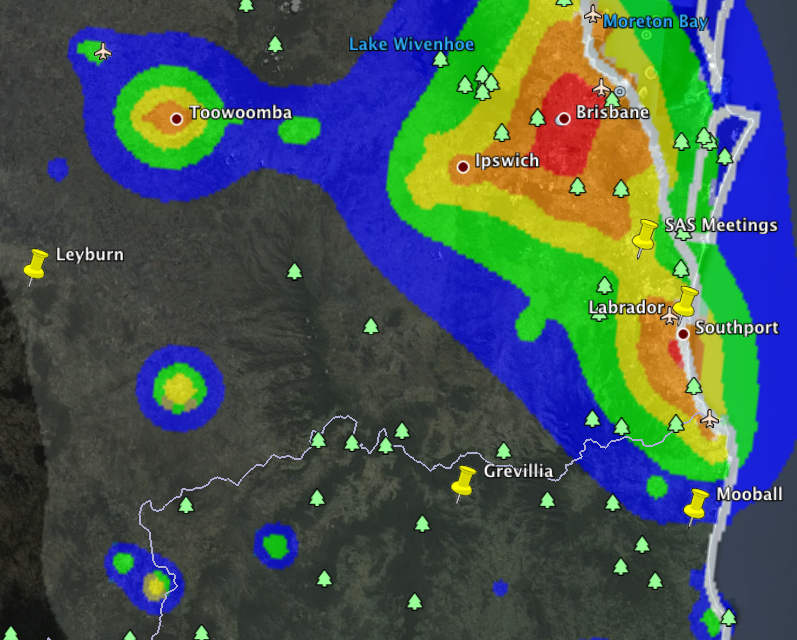
I live in the orange/red zone in Labrador, Gold Coast. The Southern Astronomical Society meeting place is in the yellow zone between Brisbane and Gold Coast. The club has a dark site at Leyburn in the west.
The map was constructed from an overlay onto Google Earth obtained from:
Initial Targets
Having read Astronomy magazine for many years, I knew of lots of interesting targets but the main constellations I could actually find were the brightest ones – Orion, Scorpius, Crux – so these were my initial targets.
Orion December 26, 2011
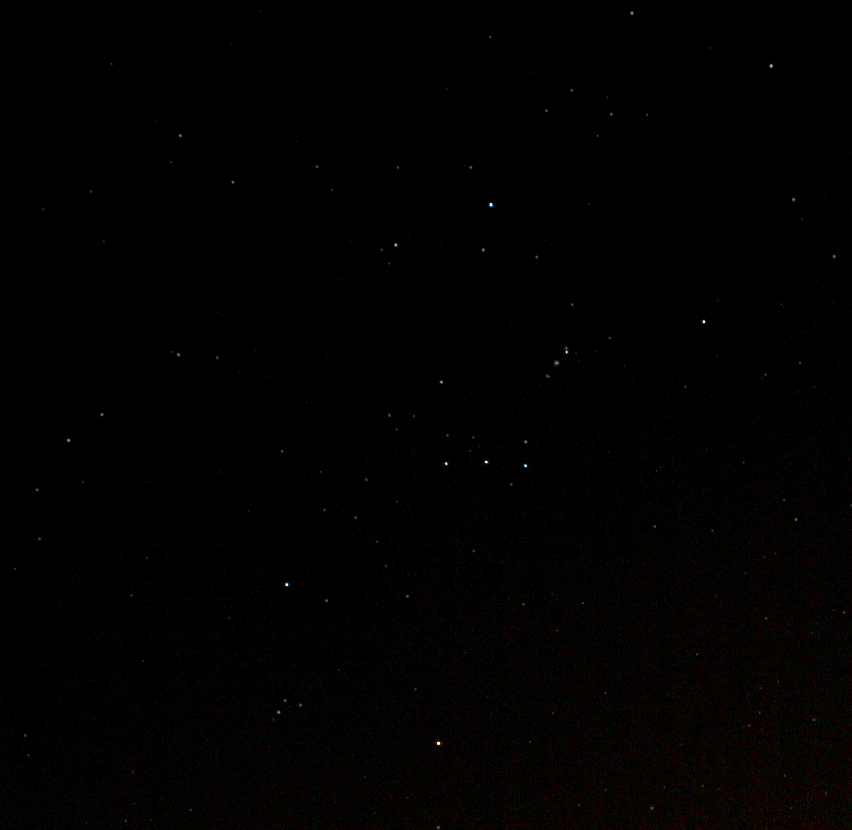 ISO100. 40 x 5 sec. f/4.0. No tracking.
My first picture of something I could recognize. Nebulosity controlled the ISO setting, the exposure time and the number of shots. The shots just started appearing as new files on my computer one after another, which was neat. Nebulosity then stacked (translate + rotate) all the files into a single picture, which was exported as “16-bit color TIFF file” to be imported into iPhoto. The controls in iPhoto (crop/exposure/contrast/saturation/sharpness) were the only image processing done. The camera was set to f/4.0 and Nebulosity did not control this; it took me weeks to realize this and change it to f/1.8 (see next post).
Crux January 20, 2012.
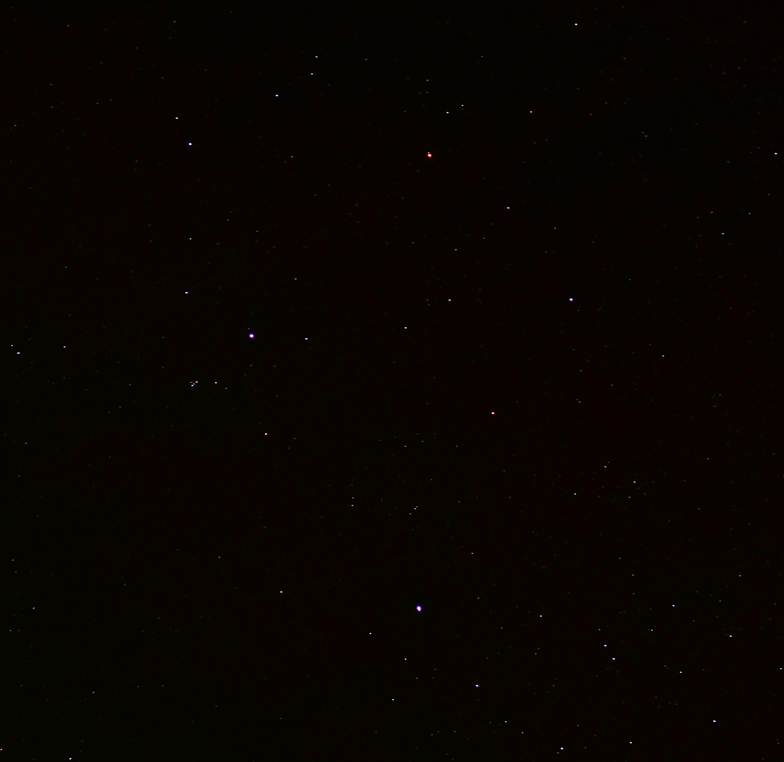
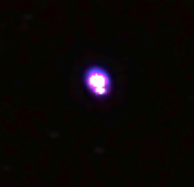
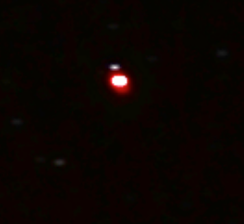
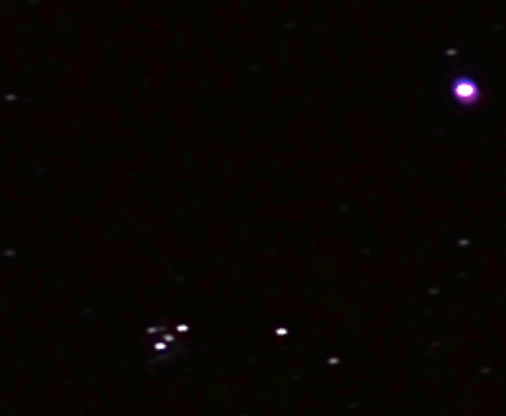
ISO100. 40 x 10 sec. f/4.0. No tracking.
At 1.30am on January 20th, the rain stopped briefly and the skies were clear long enough for me to get another shot of something I could recognize .. the Southern Cross. This time, I discovered that if I used iPhoto to zoom in on things, interesting detail appeared. The brightest star, Acrux , at the bottom of the cross is actually 2 stars! So is the the top star of cross, Gacrux, and it really is an orange-red star so the colour difference was real. The fuzzy spot to the south-west of the left star of the cross, Becrux, was the first glimmer of the Jewel Box Cluster. Under city skies, it was hard to see the whole cross at once a lot of the time so seeing this detail in my picture was a lot of fun.
Orion February 9, 2012
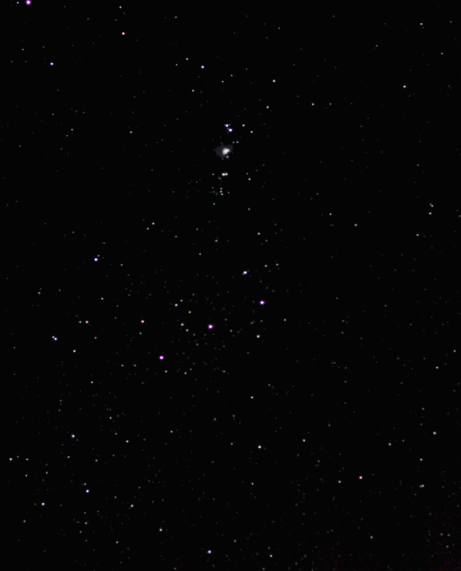
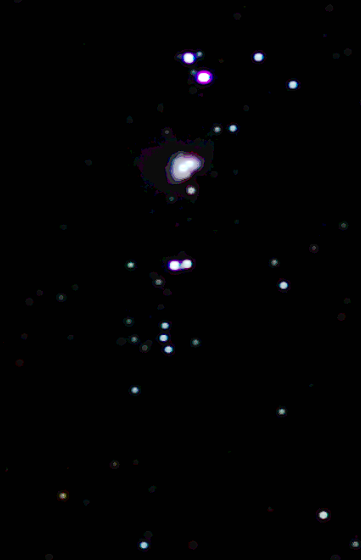
ISO100. 108 x 5 sec. f/4.0
8pm February 9th and another brief pause in the rain. I had not yet discovered that the camera was still set to f/4.0 or that really large numbers of subs was not helping. However, I had discovered dew and built a large cardboard dew protector. I had also discovered a Nebulosity menu item “Adjust Color Background (Offset)” which removes lots of light pollution. Doing this allowed more adjustments in iPhoto, which, in turn showed more star colours and the first traces of the Orion Nebula M42. I was hovering on the edge of getting into image processing.
situs togel
toto togel
toto togel
toto slot
toto togel
situs togel
situs togel
prediksi hk
prediksi sdy
situs toto
toto slot
situs toto
pam4d
situs togel
gimbal4d
pam4d
pam4d
gimbal4d
sangkarbet
sangkarbet
gimbal4d
situs toto
toto slot
situs toto
toto slot
situs toto
toto slot
toto slot
toto slot
situs toto
situs toto
toto slot
toto slot
pafikotatambrauw.org
pafikotapegununganbintang.org
pafikotamimika.org
pafikotamamujutengah.org
pafikotamalukutenggara.org
pafikotabovendigoel.org
pafikotamalukutengah.org
pafikotalannyjaya.org
pafikotakepulauanyapen.org
pafikotaintanjaya.org
pafikotaburuselatan.org
pafikotabiaknumfor.org
situs toto
situs slot
link slot88
slot online
link slot
slot resmi
togel resmi
jacktoto
situs toto
situs slot
situs slot
situs toto
link slot
rtp slot
slot gacor
slot gacor
link slot
situs toto
jacktoto
situs toto
situs toto
rtp slot
rtp slot
rtp slot
rtp slot
situs toto
situs toto
situs toto
link slot
jacktoto
jacktoto
jacktoto
jacktoto
jacktoto
jacktoto
<a href="https://www.zaliasisazuolynas.lt/"jacktoto
jacktoto
jacktoto
jacktoto
jacktoto
jacktoto
jacktoto
situs totolink slot
link slot